×

1 / 1

Goat anti-Rabbit IgG (H+L) Secondary Antibody, Alexa Fluor 488
一键复制产品信息

货号:
AWS0005
应用:
IF,FCM
反应性:
Rabbit
来源:
Goat
  • 50μL
  • ¥80
  • 现货
  • 100μL
  • ¥150
  • 现货
  • 500μL
  • ¥650
  • 现货
  • 产品概述
  • Product Details


    Host Species:

    Goat

    Reactivity:

    Rabbit

    Concentration:

    1 mg/mL


    Clonality:

    Polyclonal

    Isotype:

    IgG

    Conjugate:

    Alexa Fluor 488  


    Formulation:

    Liquid in PBS containing 50% glycerol, 1% BSA and 0.05% PC300.


    Purification:

    Affinity-chromatography


    Storage:

    -20°C,store in dark,1 year


    Applications


    IF 1:100-1:1000

    FCM 1:100-1:1000


    Information


    Based on immunoelectrophoresis and/or ELISA, the antibody reacts with whole molecule rabbit IgG. It also reacts with the light chains of other rabbit immunoglobulins. No antibody was detected against non-immunoglobulin serum proteins. The antibody may cross-react with immunoglobulins from other species.

    RRID: AB_2924422


    Product images
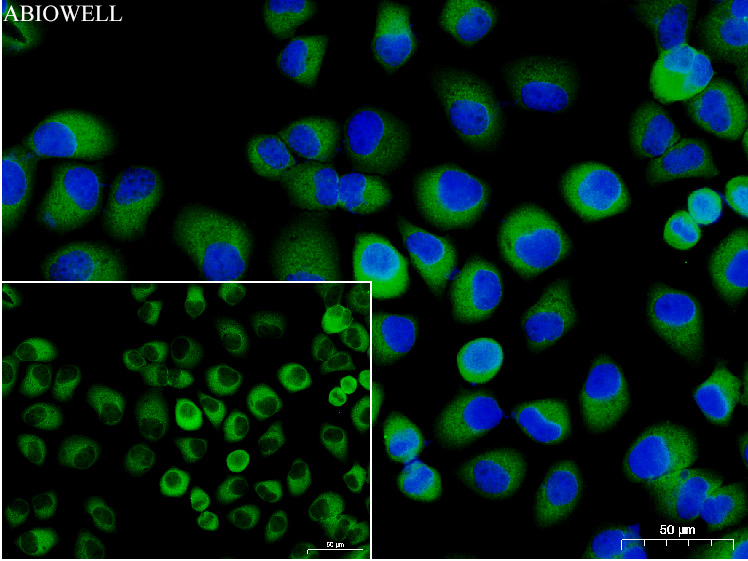
     Goat anti-Rabbit IgG (H+L) Secondary Antibody, Alexa Fluor 488 - 1 Fig: Immunocytochemistry analysis of Hela cells labeling Goat Anti-Rabbit IgG H&L (iFluor™ 488, AWS0005c) was used as the secondary antibody at 1/200 dilution for 60 minutes at 37 ℃. Nuclear DNA was labelled in blue with DAPI(AWC0291).
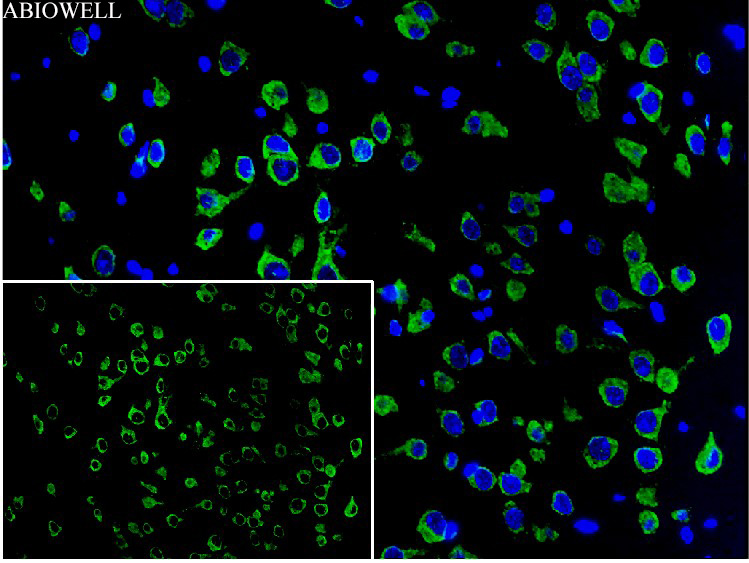
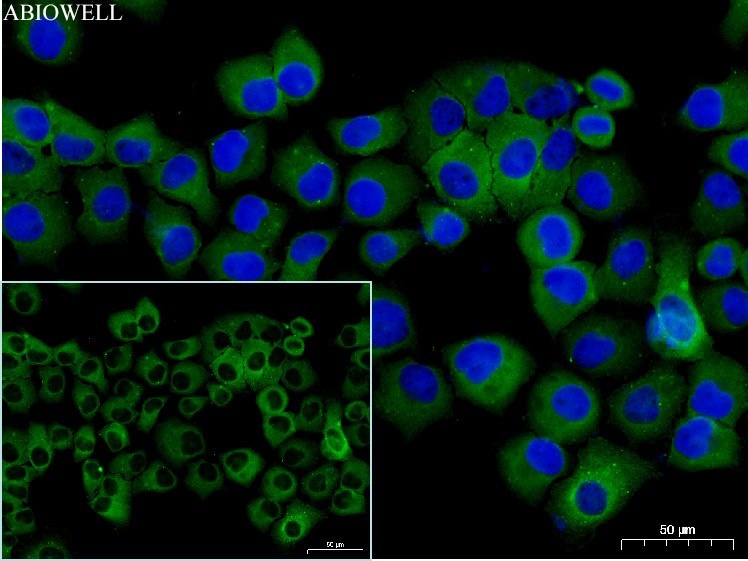
     Goat anti-Rabbit IgG (H+L) Secondary Antibody, Alexa Fluor 488 - 2 Fig: Immunocytochemistry analysis of Hela cells labeling Goat Anti-Rabbit IgG H&L (iFluor™ 488, AWS0005c) was used as the secondary antibody at 1/200 dilution for 60 minutes at 37 ℃. Nuclear DNA was labelled in blue with DAPI(AWC0291).
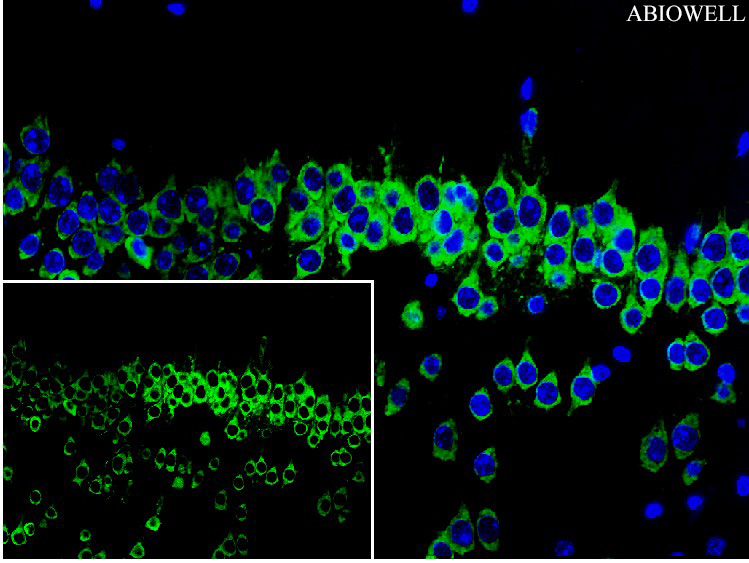
     Goat anti-Rabbit IgG (H+L) Secondary Antibody, Alexa Fluor 488 - 3 Fig: Fluorescence immunohistochemical analysis of MOUSE-brain cortex tissue (Formalin/PFA-fixed paraffin-embedded sections). Goat Anti-RABBIT IgG H&L (iFluor™ 488, AWS0005) was used as the secondary antibody at 1/200 dilution for 60 minutes at 37 ℃.DAPI (blue, AWC0291) was used as a nuclear counter stain. Image acquisition was performed with Slide Scanner.
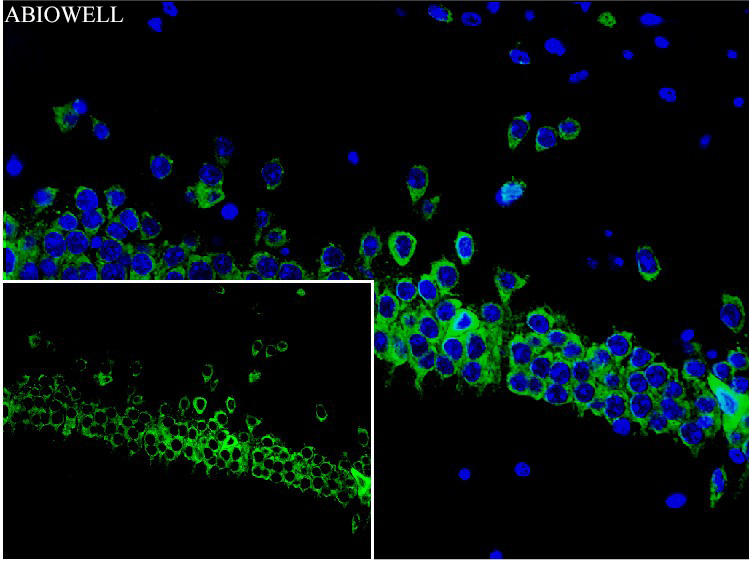
     Goat anti-Rabbit IgG (H+L) Secondary Antibody, Alexa Fluor 488 - 4 Fig: Fluorescence immunohistochemical analysis of Mouse-hippocampus tissue (Formalin/PFA-fixed paraffin-embedded sections). Goat Anti-RABBIT IgG H&L (iFluor™ 488, AWS0005) was used as the secondary antibody at 1/200 dilution for 60 minutes at 37 ℃.DAPI (blue, AWC0291) was used as a nuclear counter stain. Image acquisition was performed with Slide Scanner.
     Goat anti-Rabbit IgG (H+L) Secondary Antibody, Alexa Fluor 488 - 5 Fig: Fluorescence immunohistochemical analysis of Mouse-hippocampus tissue (Formalin/PFA-fixed paraffin-embedded sections). Goat Anti-RABBIT IgG H&L (iFluor™ 488, AWS0005) was used as the secondary antibody at 1/200 dilution for 60 minutes at 37 ℃.DAPI (blue, AWC0291) was used as a nuclear counter stain. Image acquisition was performed with Slide Scanner.

    引用文献 (59)

    PHYTOMEDICINE IF:8.3

    Background Oligoasthenospermia is emerging as a critical cause of male infertility resulting from spermatogenesis dysfunction (SGD). Guilu Erxian glue (GLEXG) has traditionally been used to improve sperm quality, but its mechanism remains unclear. Purpose This study investigates the therapeutic mechanism of GLEXG and its active ingredient quercetin in a Tripterygium wilfordii polyglycoside (GTW)-induced SGD mouse model and GC-1 spermatogonial cells. Methods An SGD model was established by administering GTW (60 mg/kg/day, oral gavage) to BALB/c mice for four weeks, followed by treatment with GLEXG (2.25, 4.50, or 9.00 g/kg/day) or vitamin E (0.02 g/kg/day) for another four weeks. Therapeutic effects were assessed by sperm parameters. Key bioactive constituents and mechanistic pathways were identified using integrated network pharmacology and metabolomics analyses. The role of ferroptosis and associated signaling pathways was validated. Results GLEXG restored sperm motility to 78% and sperm concentration to 67% of normal levels ( p < 0.05) in SGD mice and improved testicular histopathology. Metabolomics indicated protection against ferroptosis through modulation of glutathione metabolism. Quercetin was identified as the key component targeting HIF-1α. In erastin-induced ferroptosis, GLEXG-containing serum and quercetin restored GC-1 cell viability by 60% and 46%, respectively; reduced lactate dehydrogenase release (76%; 50%), reactive oxygen species (ROS) (67%; 53%), malondialdehyde (MDA) (72%; 54%), and Fe²⁺ (96%; 86%); elevated the glutathione/glutathione disulfide (GSH/GSSG) ratio (78%; 54%); downregulated hypoxia-inducible factor-1alpha (HIF-1α) (64%; 45%); and upregulated glutathione peroxidase 4 (GPX4) (63%; 32%) and solute carrier family 7 member 11 (SLC7A11) (64%; 42%) ( p < 0.05). These effects were reversed by HIF-1α overexpression. In vivo , HIF-1α overexpression abrogated quercetin’s protection on sperm motility (53%), sperm concentration (53%), and testicular lesions ( p < 0.05). Conclusion GLEXG and quercetin alleviate GTW-induced SGD by inhibiting ferroptosis via HIF-1α/SLC7A11.

    pubTime 2025-09-23
    Application
    IF
    Specie
    Mouse
    Dilution
    1:200
    FREE RADICAL BIOLOGY AND MEDICINE IF:8.2

    Skeletal muscle atrophy, a debilitating complication of COPD, is closely linked to cigarette smoke (CS) exposure. The epigenetic regulator HDAC2 has been implicated, but the upstream regulatory mechanisms and precise downstream pathways are unclear. Using a CS-induced mouse atrophy model and C2C12 myotubes treated with cigarette smoke extract (CSE), we systematically investigated the role of USP47/HDAC2/CYP1A1/ROS axis through gain/loss-of-function studies, RNA-seq, ChIP-qPCR, co-immunoprecipitation, and ubiquitination assays. HDAC2 was downregulated in atrophic muscle, and its overexpression mitigated CS-induced atrophy, improved grip strength, and enhanced muscle regeneration. HDAC2 acted as a transcriptional repressor of CYP1A1 by deacetylating H3K9 and H3K27 at the promoter, thus curtailing ROS-driven excessive autophagy. We further discovered that the deubiquitinase USP47 is the key upstream regulator of HDAC2. USP47 directly interacted with HDAC2, promoted its deubiquitination, and enhanced its protein stability. Consequently, USP47 overexpression phenocopied the benefits of HDAC2 overexpression, which were effectively nullified by restoring CYP1A1 expression. In conclusion, we delineate a previously unrecognized signaling axis wherein USP47 stabilizes HDAC2 to inhibit the CYP1A1/ROS/autophagy cascade, ultimately protecting against CS-induced skeletal muscle atrophy. Targeting the USP47-HDAC2 interface presents a novel therapeutic strategy for combating muscle wasting in COPD.

    pubTime 2026-01-11
    Application
    IF
    Specie
    Mouse
    Dilution
    1:200
    FREE RADICAL BIOLOGY AND MEDICINE IF:8.2

    Pulmonary vascular remodeling is a key structural alteration in pulmonary hypertension (PH), which involves intima, media, and adventitia remodeling. The media remodeling, composed predominantly of pulmonary artery smooth muscle cells (PASMCs), has been the focus of prior pathological descriptions and pathophysiological studies in PH. The cellular processes underlying muscularization caused by PASMCs proliferation are not completely understood. In the current study, we aim to explore the role of NR4A3 in PASMCs during the development of PH and the molecular mechanisms of act of regulating from the perspective of endothelial cell (EC)-smooth muscle cell (SMC) interaction. Utilizing a Sugen/hypoxia (SuHx) mouse model of PH, we found that NR4A3 expression was significantly upregulated in the medial layer of remodeled pulmonary arteries and in hypoxia-exposed human PASMCs in vitro . Specific knockdown of NR4A3 in PASMCs, achieved via adeno-associated virus vectors, markedly attenuated SuHx-induced elevation of right ventricular systolic pressure, pulmonary vascular remodeling and right ventricular hypertrophy. Functional assays confirmed that NR4A3 promotes PASMC proliferation confirmed by CCK-8, Ki-67 and EDU staining in vitro . Mechanistically, we identified a novel EC-to-SMC signaling axis. Under physiological conditions, endothelial caveolin-1 (Cav-1) directs the sorting of microRNA-17 (miR-17) into secreted extracellular vesicles (EVs). These EVs deliver miR-17 to adjacent PASMCs, where it post-transcriptionally represses NR4A3 expression. In PH, loss of endothelial Cav-1 disrupts this intercellular transfer, leading to NR4A3 depression. The upregulated NR4A3, in turn, involves in activation of the PI3K/AKT/mTOR signaling pathway, which drives PASMC proliferation and contributes to vascular remodeling. Our findings elucidate a Cav-1-dependent EV-mediated miR-17/NR4A3/PI3K-AKT-mTOR axis as a crucial mechanism in EC-SMC crosstalk during PH pathogenesis, providing a better understanding of the novel molecular mechanism underlying the EC-SMC crosstalk occurring in pulmonary vascular remodeling but also offer novel therapeutic targets for the prevention of pulmonary vascular remodeling in PH.

    pubTime 2026-03-09
    Application
    IF
    Specie
    Mouse,Human
    Dilution
    1:200
    Oxidative Medicine and Cellular Longevity IF:7.31

    Objective. Here, we aimed to explore the main mechanism of Yaobishu (YBS) in lumbar disc herniation (LDH). Methods and Results. Eighteen compounds that might act on LDH were obtained through a combination of network pharmacology prediction and identification by high-performance liquid chromatography-mass spectrometry. The key compounds were palmitic acid and trans-4-hydroxy-3-methoxycinnamate (cinnamate). KEGG analysis demonstrated that palmitic acid target genes mainly regulate the PPAR signaling pathway, Ras signaling pathway, and fatty acid metabolism. Cinnamate target genes were primarily involved in chemical carcinogenesis-receptor activation, lipid and atherosclerosis, the HIF-1 signaling pathway, and nitrogen metabolism. The rat LDH model was constructed using autologous nucleus pulposus tissue implantation. Differential expression gene (DEGs) related to metabolism (CDKN1A and UHRF1), inflammation (S100A9 and SOCS3), autophagy (DCN and LEPR), and apoptosis (CTSW and BCL2A1) in dorsal root ganglion (DRG) tissues of the control and LDH groups was evaluated by RNA-Seq. TNF-α stimulated DRG neuronal cells were used to establish an in vitro LDH model. YBS, palmitic acid, and cinnamate reduced the expression of substance P, CGRP, S100A9, CTSW, and cleaved caspase-3, while enhancing the expression of CDKN1A, UHRF1, PCNA, Ki67, SOCS3, DCN, LEPR, and BCL2A1, as well as telomerase activity. Pearson’s correlation analysis confirmed that DCN was positively correlated with BCL2A1, indicating that autophagy might be negatively correlated with apoptosis in LDH. YBS, palmitic acid, and cinnamate reduced the Siegal neurological score and serum IL-1β and IL-18 levels, while increasing changes in the hind paw mechanical withdrawal threshold. The RNA-Seq results further showed that YBS downregulated S100A9 and CTSW expression, while upregulating SOCS3, CDKN1A, UHRF1, DCN, LEPR, and BCL2A1 expression. Conclusion. YBS and its compounds, palmitic acid, and cinnamate, attenuated LDH by regulating the inflammatory, metabolic, autophagic, and apoptotic pathways. Our results might improve the theoretical and experimental basis for clinical applications of LDH disease treatment.

    pubTime 2022-05-14
    Application
    IF
    Specie
    Rat
    Dilution
    CLINICAL SCIENCE IF:6.7

    Acute graft-versus-host disease (aGVHD) poses a significant impediment to achieving a more favourable therapeutic outcome in allogeneic hematopoietic stem cell transplantation (allo-HSCT). Our prior investigations disclosed a correlation between p53 downregulation in CD4+ T cells and the occurrence of aGVHD. Notably, the insufficiency of the CCCTC-binding factor (CTCF) emerged as a pivotal factor in repressing p53 expression. However, the existence of additional mechanisms contributing to the reduction in p53 expression remains unclear. Interferon (IFN)-γ, a pivotal proinflammatory cytokine, assumes a crucial role in regulating alloreactive T cell responses and plays a complex part in aGVHD development. IFN-γ has the capacity to induce autophagy, a vital catabolic process facilitating protein degradation, in various cell types. Presently, whether IFN-γ participates in the development of aGVHD by instigating the autophagic degradation of p53 in CD4+ T cells remains an unresolved question. In this study, we demonstrated that heightened levels of IFN-γ in the plasma during aGVHD promoted the activation, proliferation, and autophagic activity of CD4+ T cells. Furthermore, IFN-γ induced the nuclear-to-cytoplasm translocation and autophagy-dependent degradation of p53 in CD4+ T cells. The translocation and autophagic degradation of p53 were contingent upon HMGB1, which underwent upregulation and translocation from the nucleus to the cytoplasm following IFN-γ stimulation. In conclusion, our data unveil a novel mechanism underlying p53 deficiency in CD4+ T cells among aGVHD patients. This deficiency is induced by IFN-γ and relies on autophagy, establishing a link between IFN-γ, HMGB1-mediated translocation, and the autophagic degradation of p53.

    pubTime 2024-09-23
    Application
    IF
    Specie
    Human
    Dilution
    1:200
    MOLECULAR MEDICINE IF:6

    Background Pulmonary fibrosis (PF) is a progressive and difficult-to-heal lung disease that poses a significant threat to human life and health. This study aimed to investigate the potential pathological mechanisms of PF and to identify new avenues for the treatment of PF.Methods Clinical samples were collected to assess the effect of disulfide-bond A oxidoreductase-like protein (DsbA-L) on PF. TGF-β1-induced MLE-12 cell model and bleomycin (BLM)-induced mice model were established. Changes in physiological morphology and fibrosis were observed in the lung tissues. The degree of apoptosis and the mitochondrial function was analyzed. The expression of relative cytokines was examined. The CD68+/CD206+ ratio was determined to indicate M2 macrophage polarization.Results The expression of DsbA-L was upregulated in patients with PF and PF-like models. In vitro, DsbA-L overexpression exacerbated TGF-β1-induced the deposition of extracellular matrix (ECM), apoptosis, inflammation, and mitochondrial damage, whereas DsbA-L silencing exerted the opposite effects. DsbA-L silencing inhibited the activation of AKT1, NLRP3, and SMAD3 by TGF-β1. MLE-12 cells silencing DsbA-L limited the polarization of RAW264.7 cells towards the M2 phenotype. AKT1 agonist or NLRP3 agonist reversed the role of DsbA-L silencing in inhibiting the TGF-β1/SMAD3 pathway and M2 macrophage polarization. In vivo, DsbA-L knockout protected mice from PF-like pathological damage caused by BLM.Conclusion DsbA-L exhibited a significant profibrotic effect in lung epithelial cells and mice, which increased the levels of AKT1 and NLRP3 to activate the TGF-β1/SMAD3 pathway and M2 macrophage polarization. These findings could shed light on new clues for comprehension and treatment of PF.

    pubTime 2024-11-23
    Application
    IHC,ICC
    Specie
    Human,Mouse
    Dilution
    Cancer Cell International IF:6

    Background Histone lactylation has emerged as an epigenetic driver of tumor chemoresistance. Our prior work identified the phytochemical combination icariin-curcumol (Ica-Cur) as a potential therapeutic agent against docetaxel (DTX)-resistant prostate cancer (PCa). This study aimed to investigate the mechanistic link between histone lactylation and DTX resistance in PCa, and evaluates Ica-Cur’s regulatory role in this process. Methods DTX-resistant LNCaP/R cells were generated from parental LNCaP PCa cells. Xenograft models were established in BALB/c nude mice using both cell lines. Interventions included pharmacological modulation of glycolysis (sodium lactate [Nala], a glycolysis activator and 2-deoxy-D-glucose [2-DG], a glycolysis inhibitor) and genetic silencing of forkhead box M1 (FOXM1) via lentiviral constructs (sh-FOXM1). The enrichment of histone H3K18 lactylation (H3K18la) at the FOXM1 promoter was validated. Tumor growth, lactate levels, lactate dehydrogenase (LDH) activity, proliferation, and apoptosis were systematically analyzed. Results Resistant LNCaP/R models exhibited significant upregulation of H3K18la and FOXM1 compared to controls. Nala increased lactate production, enhanced H3K18la deposition, and stimulated proliferation while suppressing apoptosis. Conversely, 2-DG reduced H3K18la deposition and inhibited proliferation. FOXM1 expression was directly regulated by H3K18la, with sh-FOXM1 reducing LDH activity, inhibiting proliferation, and inducing apoptosis. Ica-Cur restored DTX sensitivity by suppressing H3K18la and FOXM1 expression. Conclusion These findings identify H3K18la-mediated FOXM1 activation as a novel mechanism underlying DTX resistance in PCa. Ica-Cur may represent a promising therapeutic agent by targeting lactylation-dependent epigenetic regulation and FOXM1-driven transcriptional activity, supporting its clinical potential for overcoming chemoresistance.

    pubTime 2025-11-25
    Application
    IF
    Specie
    Human,Mouse
    Dilution
    MOLECULAR MEDICINE IF:6

    Background Pulmonary arterial hypertension (PAH) is characterized by lipid accumulation and mitochondrial dysfunction. This study was designed to investigate the effects of hypoxia-inducible factor-1α (HIF-1α) on fatty acid uptake and mitophagy in PAH. Methods Peripheral blood samples were obtained from PAH patients. Human pulmonary arterial smooth muscle cells and rat cardiac myoblasts H9c2 were subjected to hypoxia treatment. Male Sprague–Dawley rats were treated with monocrotaline (MCT). Right ventricular systolic pressure (RVSP), right ventricular hypertrophy index (RVHI), pulmonary artery remodeling, and lipid accumulation were measured. Cell proliferation and ROS accumulation were assessed. Mitochondrial damage and autophagosome formation were observed. Co-immunoprecipitation was performed to verify the interaction between HIF-1α and CD36/PI3K p85α. Results HIF-1α, CD36, Parkin, and PINK1 were upregulated in PAH samples. HIF-1α knockdown or PI3K p85α knockdown restricted the expression of HIF-1α, PI3K p85α, Parkin, PINK1, and CD36, inhibited hPASMC proliferation, promoted H9c2 cell proliferation, reduced ROS accumulation, and suppressed mitophagy. CD36 knockdown showed opposite effects to HIF-1α knockdown, which were reversed by palmitic acid. The HIF-1α activator dimethyloxalylglycine reversed the inhibitory effect of Parkin knockdown on mitophagy. In MCT-induced rats, the HIF-1α antagonist 2-methoxyestradiol (2ME) reduced RVSP, RVHI, pulmonary artery remodeling, lipid accumulation, and mitophagy. Recombinant CD36 abolished the therapeutic effect of 2ME but inhibited mitophagy. Activation of Parkin/PINK1 by salidroside (Sal) promoted mitophagy to ameliorate the pathological features of PAH-like rats, and 2ME further enhanced the therapeutic outcome of Sal. Conclusion PI3K p85α/HIF-1α induced CD36-mediated fatty acid uptake and Parkin/PINK1-dependent mitophagy to accelerate the progression of experimental PAH. Graphical Abstract

    pubTime 2024-11-11
    Application
    IHC,IF
    Specie
    Human
    Dilution
    1:100(IHC),1:200(IF)
    CELL BIOLOGY AND TOXICOLOGY IF:5.9

    Background: A disintegrin and metalloproteinase with thrombospondin motifs 1 (ADAMTS1) is involved in the occurrence and development of myocardial fibrosis. Here, we sought to explore the specific regulatory mechanism of ADAMTS1 in cardiac fibrosis post-myocardial infarction (CFPMI). Methods: Blood samples from patients with myocardial fibrosis were collected. A CFPMI mouse model and in vitro models involving human or mouse cardiac fibroblasts treated with TGF-β1 or Ang II were constructed. ChIP was used to confirm that SMAD2 binds to ADAMTS1, and Co-IP was used to verify the interaction between ADAMTS1 and HDAC6. Cellular models with SMAD2 knockdown, ADAMTS1 regulation, and HDAC6 inhibitor treatment were used to study their roles in fibrosis. Finally, AAV-shRNA-HDAC6 and ADAMTS1 inhibitor effects were verified in vivo. Results: ADAMTS1 levels were higher in myocardial fibrosis patients' serum. Increased ADAMTS1 and p-SMAD2 were found in fibrotic mouse hearts and human cardiac fibroblasts stimulated with fibrotic factors. ChIP validated the binding of SMAD2 to ADAMTS1. Mechanistically, SMAD2 regulated ADAMTS1 expression during TGF-β1-induced fibrosis in human and mouse cardiac fibroblasts. Overexpression of ADAMTS1 enhanced the production of collagen fiber proteins in human and mouse cardiac fibroblasts induced by TGF-β1. Moreover, HDAC6 expression was elevated in CFPMI mouse hearts and ADAMTS1 inhibited HDAC6 to regulate fibrosis. ADAMTS1 interacted with HDAC6 during fibrosis. In vivo, shRNA-HDAC6 and ADAMTS1 inhibitor treatment alleviated myocardial fibrosis and improved cardiac function after CFPMI. Conclusions: Targeting ADAMTS1/HDAC6 alleviated TGF-β1/SMAD2-associated cardiac fibrosis in CFPMI. This study may provide a novel theoretical basis for the treatment of myocardial fibrosis.

    pubTime 2026-02-12
    Application
    IF
    Specie
    Mouse,Human
    Dilution
    AMERICAN JOURNAL OF CHINESE MEDICINE IF:5.7

    Ischemic stroke is a serious health hazard that lacks effective treatment strategies. This study aims to investigate baicalin’s effect on tight junctions and immune cell infiltration after ischemic stroke injury. Rat brain microvascular endothelial cells (BMECs) were treated with OGD/R to establish an in vitro model. Caspase-3, Bax, Bcl-2, zonula occludens-1 (ZO-1), occludin, claudin-5, tumor necrosis factor (TNF)- α , interleukin (IL)-6, inducible nitric oxide synthase (iNOS), Toll-like receptor (TLR) 2, TLR4, and nuclear factor-kappa B (NF- κ B) expressions were detected using qRT-PCR and western blotting. ZO-1, TNF- α , iNOS, IL6, CD31, and ZO-1 expressions were examined using immunofluorescence. A tube formation assay was performed to measure angiogenesis. An ischemia-reperfusion model in rats was established by middle cerebral artery occlusion. The infarct volume was observed using 2,3,5-triphenyltetrazolium chloride staining. TNF- α , iNOS, and IL6 levels in the serum were tested using ELISA. Flow cytometry was performed to examine immune cell inflammatory infiltration. Baicalin had no significant effect on the proliferation of normal BMECs. Baicalin inhibited apoptosis, protected against tight junction injury, and alleviated the inflammatory response in OGD/R-induced BMECs and IR rats, with the highest dose (25 μ g/mL) exerting a superior effect. Baicalin decreased the neurological function score, infarct volume, and brain water content, relieved brain morphological changes, and inhibited immune cell infiltration in vivo . In conclusion, baicalin could reduce BMECs apoptosis, protect tight junctions, and resist immune cell infiltration, thereby alleviating ischemic stroke. Our findings potentially provide a novel treatment strategy for ischemic stroke.

    pubTime 2023-01-20
    Application
    IF
    Specie
    Rat
    Dilution

    复制成功!

    内容已复制到剪贴板

    在线客服
    关闭
    小薇 薇薇 小艾 小奥
    联系销售
    技术支持

    image.png

    月琴艾碧维二维码.jpg