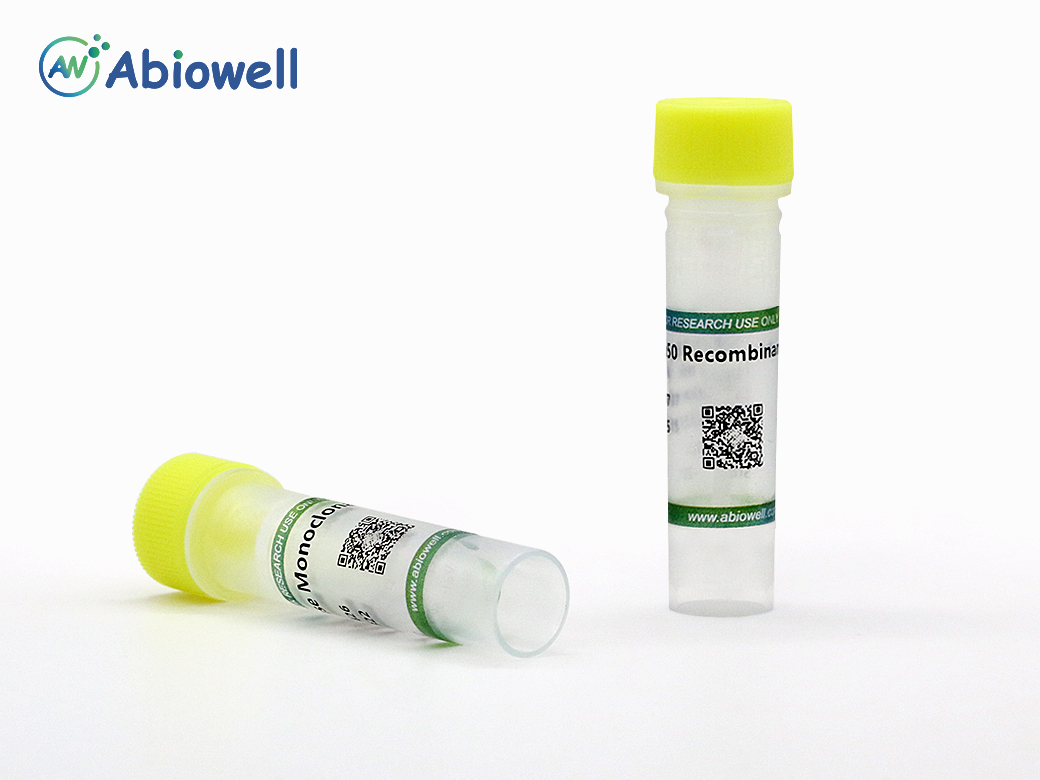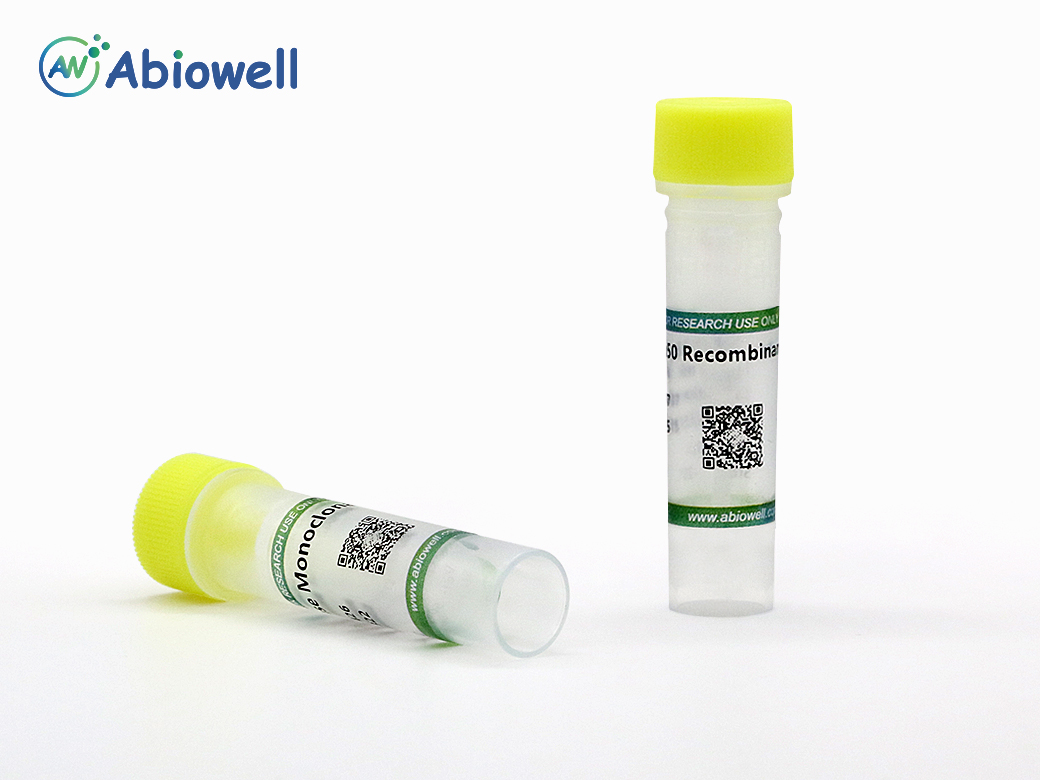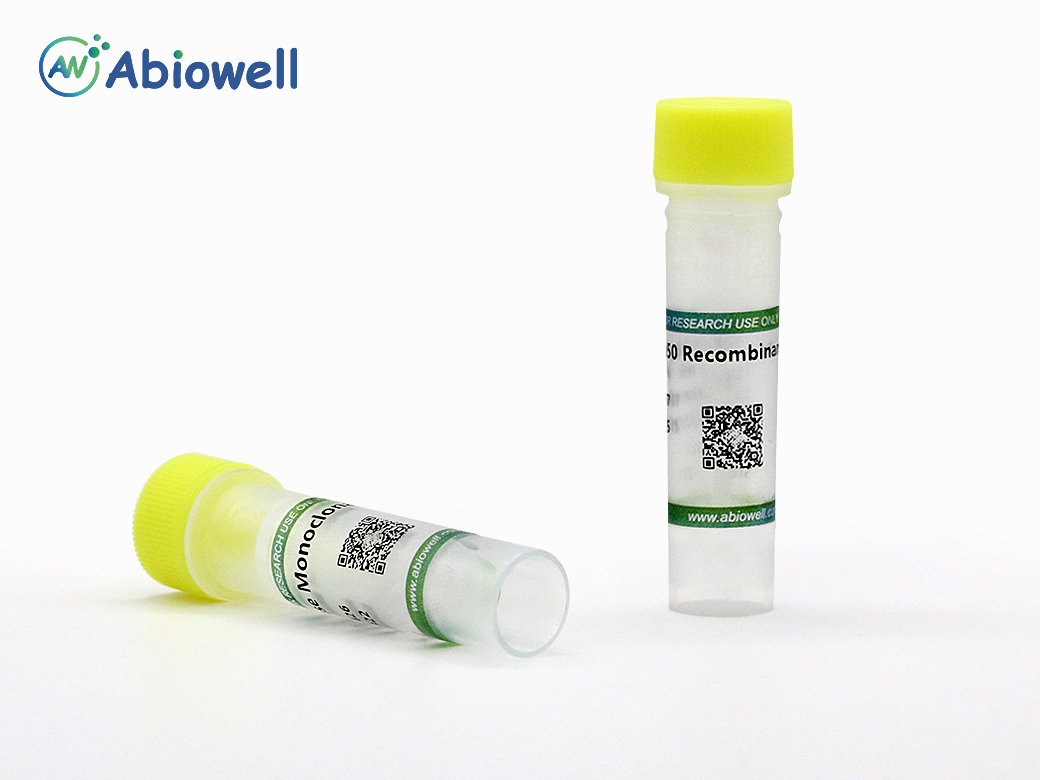
Ki67 Recombinant Rabbit Monoclonal Antibody
-
-
- 20μL
- ¥620
- 1-3个工作日
-
- 50μL
- ¥1250
- 1-3个工作日
-
- 100μL
- ¥2200
- 1-3个工作日
|
Product Details |
Host Species: Rabbit |
Reactivity: Human, Mouse, Rat |
Molecular Wt: Predicted MW: 359 kDa | |||
|
|
Clonality: Monoclonal |
Isotype: IgG |
Concentration: 1.065mg/ml | |||
|
|
Other Names: Antigen KI 67; Antigen KI-67; Antigen Ki67; Ki 67; KI67; KIA; MKI67; MIB; MIB 1; Antigen identified by monoclonal antibody Ki 67; Antigen identified by monoclonal antibody Ki-67; PPP1R105; Proliferation marker protein Ki-67; Proliferation related Ki 67 antigen | |||||
|
|
Formulation: Liquid in PBS containing 50% glycerol, 0.5% BSA and 0.02% sodium azide. | |||||
|
|
Purification: Affinity-chromatography | |||||
|
|
Storage: Store at -20°C. Stable for one year after shipment. Aliquoting is unnecessary for -20°C storage. | |||||
|
Applications |
WB 1:1000-1:5000 | |||||
|
Immunogen |
Gene Name: MKI67 |
Protein Name: Proliferation marker protein Ki-67 | ||||
|
|
Gene ID: 4288 (Human) |
SwissPro: P46013 (Human) | ||||
|
Immunogen |
Subcellular Location: Chromosome. Nucleus. Nucleus, nucleolus. | |||||
|
|
Immunogen: Synthetic peptide within human Ki67. AA range: 1040-1080. | |||||
|
|
Specificity: Ki67 Monoclonal Antibody detects endogenous levels of Ki67 protein. | |||||
| Product images | |
|
Fig: Multiplex immunohistochemistry analysis of Mouse-spleen tissue (Formalin/PFA-fixed paraffin-embedded sections). Merged staining of anti-Ki67 (AWA10320; green; TSA-520:AWI0688), anti-AGMAT (AWA54578; red; TSA-570: AWI0689), anti-CD20 (AWA10037; white; TSA-690: AWI0691). Antibody Wash Solution (for mIHC) (AWI0707, 37℃, 20 minutes) was used in between rounds of tyramide signal amplification to remove the antibody from the previous round, to avoid any cross-reactivity. The section was incubated in three rounds of staining; in the order of Ki67 (AWA10320) (1/800 dilution), anti-AGMAT (AWA54578) (1/200 dilution), anti-CD20 (AWA10037) (1/200 dilution); each using a separate fluorescent tyramide signal amplification system. DAPI (blue, AWC0291) was used as a nuclear counter stain. Microscopy and pseudocoloring of individual TSA dyes was performed using a pannoramic midi. |
|
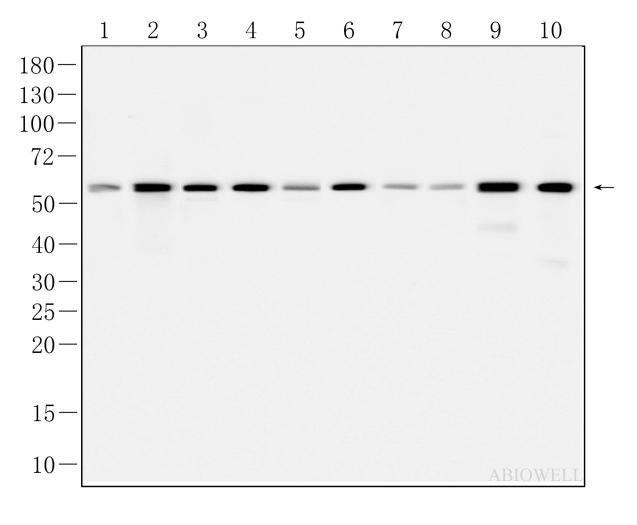
Fig : Western blot analysis of Ki67 on different lysates. Proteins were transferred to a NC membrane and blocked with 5% NF-Milk in TBST for 1 hour at room temperature. The primary antibody (AWA10320, 1/1000) was used in TBST at room temperature for 2 hours. Goat Anti-Rabbit IgG - HRP Secondary Antibody (AWS0002) at 1:5,000 dilution was used for 1 hour at room temperature. Positive control: Lane 1: A431 cell Lane 2: A549 cell Lane 3: SIHa cell Lane 4: HepG2 cell Lane 5: CAL27 cell Lane 6: MCF-7 cell Lane 7: Raji cell Lane 8: HaCaT cell Lane 9: PANC-1 cell Predicted molecular weight:359 kDa Observed molecular weight:359 kDa |
|
Fig : Western blot analysis of Ki67 on different lysates. Proteins were transferred to a NC membrane and blocked with 5% NF-Milk in TBST for 1 hour at room temperature. The primary antibody (AWA10320, 1/1000) was used in TBST at room temperature for 2 hours. Goat Anti-Rabbit IgG - HRP Secondary Antibody (AWS0002) at 1:5,000 dilution was used for 1 hour at room temperature. Positive control: Lane 1: SIHa cell Lane 2: EL-4-B5 cell Predicted molecular weight:359 kDa Observed molecular weight:359 kDa |
|
Fig: Immunocytochemistry analysis of U2SO cells labeling Ki67 with Rabbit anti-Ki67 antibody (AWA10320) at 1/100 dilution(green). Cells were fixed in 4% paraformaldehyde for 10 minutes at 37 ℃, permeabilized with 0.03% Triton X-100 in PBS for 30 minutes, and then blocked with 5% BSA for 60 minutes at 37 ℃. Cells were then incubated with Rabbit anti-Ki67 antibody (AWA10320) at 1/100 dilution in 2% negative goat serum overnight at 4 ℃. Goat Anti-Rabbit IgG H&L (iFluor™488, AWS0005) was used as the secondary antibody at 1/200 dilution for 60 minutes at 37 ℃. Nuclear DNA was labelled in blue with DAPI(AWC0291). |
|
Fig: Multiplex immunohistochemistry analysis of Mouse-spleen tissue (Formalin/PFA-fixed paraffin-embedded sections). Merged staining of anti-CD3G (AWA12677; green; TSA-520:AWI0688), anti-Ki67 (AWA10320; red; TSA-570: AWI0689), anti-F4/80 (AWA10493; white; TSA-690: AWI0691).Antibody Wash Solution (for mIHC) (AWI0707, 37℃, 20 minutes) was used in between rounds of tyramide signal amplification to remove the antibody from the previous round, to avoid any cross-reactivity.The section was incubated in three rounds of staining; in the order of anti-CD3G (AWA12677) (1/200 dilution), anti-Ki67 (AWA10320) (1/200 dilution), anti-F4/80 (AWA10493) (1/200 dilution); each using a separate fluorescent tyramide signal amplification system.DAPI (blue, AWC0291) was used as a nuclear counter stain.Microscopy and pseudocoloring of individual TSA dyes was performed using a pannoramic midi. |
|
Fig : Immunohistochemical analysis of paraffin-embedded Mouse-spleen tissue with Rabbit anti- Ki67 antibody (AWA10320) at 1/200 dilution. The section was pre-treated using heat mediated antigen retrieval with Sodium citrate buffer (pH 6.0) for 20 minutes. The tissues were blocked in 3% H2O2 for 15 minutes at room temperature, washed with ddH2O and PBS, and then probed with the primary antibody (AWA10320) at 1/200 dilution for 1 hour at room temperature. The detection was performed using an HRP conjugated compact polymer system(ABIOWELL, AWI0629). DAB was used as the chromogen. Tissues were counterstained with hematoxylin and mounted with DPX. |
|
Fig : Immunohistochemical analysis of paraffin-embedded Rat-heart tissue with Rabbit anti-KI67 (AWA10320) at 1/800 dilution. The section was pre-treated using heat mediated antigen retrieval with Sodium citrate buffer (pH 6.0) for 20 minutes. The tissues were blocked in 3% H2O2 for 15 minutes at room temperature, washed with ddH2O and PBS, and then probed with the primary antibody (AWA10320) at 1/800 dilution for 1 hour at room temperature. The detection was performed using an HRP conjugated compact polymer system(ABIOWELL, AWI0629). DAB was used as the chromogen. Tissues were counterstained with hematoxylin and mounted with DPX. |
|
Fig : Immunohistochemical analysis of paraffin-embedded Rat-testicle tissue with Rabbit anti-Ki67 (AWA10320) at 1/100 dilution. The section was pre-treated using heat mediated antigen retrieval with Sodium citrate buffer (pH 6.0) for 20 minutes. The tissues were blocked in 3% H2O2 for 15 minutes at room temperature, washed with ddH2O and PBS, and then probed with the primary antibody (AWA10320) at 1/100 dilution for 1 hour at room temperature. The detection was performed using an HRP conjugated compact polymer system(ABIOWELL, AWI0629). DAB was used as the chromogen. Tissues were counterstained with hematoxylin and mounted with DPX. |
|
Fig : Immunohistochemical analysis of paraffin-embedded Rat-spleen tissue with Rabbit anti-Ki67 (AWA10320) at 1/100 dilution. The section was pre-treated using heat mediated antigen retrieval with Sodium citrate buffer (pH 6.0) for 20 minutes. The tissues were blocked in 3% H2O2 for 15 minutes at room temperature, washed with ddH2O and PBS, and then probed with the primary antibody (AWA10320) at 1/100 dilution for 1 hour at room temperature. The detection was performed using an HRP conjugated compact polymer system(ABIOWELL, AWI0629). DAB was used as the chromogen. Tissues were counterstained with hematoxylin and mounted with DPX. |
|
Fig : Immunohistochemical analysis of paraffin-embedded Mouse-large intestine tissue with Rabbit anti-Ki67 antibody (AWA10320) at 1/200 dilution. The section was pre-treated using heat mediated antigen retrieval with Sodium citrate buffer (pH 6.0) for 20 minutes. The tissues were blocked in 3% H2O2 for 15 minutes at room temperature, washed with ddH2O and PBS, and then probed with the primary antibody (AWA10320) at 1/200 dilution for 1 hour at room temperature. The detection was performed using an HRP conjugated compact polymer system(ABIOWELL, AWI0629). DAB was used as the chromogen. Tissues were counterstained with hematoxylin and mounted with DPX. |
|
Fig : Immunohistochemical analysis of paraffin-embedded Mouse-heart tissue with Rabbit anti-KI67 (AWA10320) at 1/800 dilution. The section was pre-treated using heat mediated antigen retrieval with Sodium citrate buffer (pH 6.0) for 20 minutes. The tissues were blocked in 3% H2O2 for 15 minutes at room temperature, washed with ddH2O and PBS, and then probed with the primary antibody (AWA10320) at 1/800 dilution for 1 hour at room temperature. The detection was performed using an HRP conjugated compact polymer system(ABIOWELL, AWI0629). DAB was used as the chromogen. Tissues were counterstained with hematoxylin and mounted with DPX. |
引用文献 (11)
Pulmonary vascular remodeling is a key structural alteration in pulmonary hypertension (PH), which involves intima, media, and adventitia remodeling. The media remodeling, composed predominantly of pulmonary artery smooth muscle cells (PASMCs), has been the focus of prior pathological descriptions and pathophysiological studies in PH. The cellular processes underlying muscularization caused by PASMCs proliferation are not completely understood. In the current study, we aim to explore the role of NR4A3 in PASMCs during the development of PH and the molecular mechanisms of act of regulating from the perspective of endothelial cell (EC)-smooth muscle cell (SMC) interaction. Utilizing a Sugen/hypoxia (SuHx) mouse model of PH, we found that NR4A3 expression was significantly upregulated in the medial layer of remodeled pulmonary arteries and in hypoxia-exposed human PASMCs in vitro . Specific knockdown of NR4A3 in PASMCs, achieved via adeno-associated virus vectors, markedly attenuated SuHx-induced elevation of right ventricular systolic pressure, pulmonary vascular remodeling and right ventricular hypertrophy. Functional assays confirmed that NR4A3 promotes PASMC proliferation confirmed by CCK-8, Ki-67 and EDU staining in vitro . Mechanistically, we identified a novel EC-to-SMC signaling axis. Under physiological conditions, endothelial caveolin-1 (Cav-1) directs the sorting of microRNA-17 (miR-17) into secreted extracellular vesicles (EVs). These EVs deliver miR-17 to adjacent PASMCs, where it post-transcriptionally represses NR4A3 expression. In PH, loss of endothelial Cav-1 disrupts this intercellular transfer, leading to NR4A3 depression. The upregulated NR4A3, in turn, involves in activation of the PI3K/AKT/mTOR signaling pathway, which drives PASMC proliferation and contributes to vascular remodeling. Our findings elucidate a Cav-1-dependent EV-mediated miR-17/NR4A3/PI3K-AKT-mTOR axis as a crucial mechanism in EC-SMC crosstalk during PH pathogenesis, providing a better understanding of the novel molecular mechanism underlying the EC-SMC crosstalk occurring in pulmonary vascular remodeling but also offer novel therapeutic targets for the prevention of pulmonary vascular remodeling in PH.
Background Radiation enteritis (RE) is a common complication in patients undergoing abdominal and pelvic radiotherapy. Despite the advancements in radiotherapy, effective treatments remain limited. WGX50, a bioactive compound from Sichuan pepper, has shown anti-inflammatory and antioxidant properties. This study investigates the protective effects of WGX50 on RE, focusing on its potential to reduce radiation-induced damage in the intestine. Methods Network pharmacology and molecular docking were used to identify the molecular targets of WGX50. In vitro, human intestinal epithelial cells (HIEC6) and colon cells (NCM460) were exposed to radiation and treated with WGX50. In vivo, C57BL/6 mice were administered WGX50 prior to radiation exposure. Various assays, including CCK-8, colony formation, flow cytometry, histopathology, and 16S rRNA sequencing, were performed to evaluate cell proliferation, apoptosis, oxidative stress, intestinal damage, and gut microbiota composition. Tissue transcriptome sequencing was conducted to explore differentially expressed genes. Results In vitro, WGX50 significantly mitigated radiation-induced cell damage, enhanced cell proliferation, and reduced apoptosis at non-toxic concentrations. In vivo, WGX50 treatment preserved intestinal morphology and reduced inflammatory infiltration in irradiated mice. WGX50 also protected goblet cells, maintaining mucin production and epithelial barrier function critical for intestinal homeostasis. Molecular docking, dynamics simulations and surface plasmon resonance (SPR) revealed stable binding of WGX50 to Epidermal Growth Factor Receptor (EGFR), key targets involved in oxidative stress regulation and ferroptosis inhibition. Mechanistically, WGX50 upregulated the EGFR-SLC7A11-GPX4 axis, suppressing ferroptosis and protecting intestinal cells. Additionally, 16S rRNA sequencing showed that WGX50 mitigated radiation-induced gut microbiota dysbiosis, preserving microbial diversity and promoting beneficial bacterial populations. Conclusion WGX50 demonstrates potent radioprotective effects by reducing oxidative stress, suppressing ferroptosis, and maintaining intestinal homeostasis, including goblet cell function and gut microbiota composition. These findings support WGX50’s potential as a novel therapeutic agent for the prevention and treatment of radiation enteritis.
Breast cancer is associated with a higher incidence of depression and decreased quality of life. Previous studies have indicated that quercetin can mitigate the advancement of breast cancer-related depression (BCRD); however, the specific mechanism by which quercetin affects BCRD is yet to be determined. In this study, we aimed to examine the effect of quercetin on BCRD and explore the underlying mechanisms. We established a mouse model of BCRD and administered quercetin. LC–MS was used to analyze and determine distinct alterations in metabolites in mouse tumor samples. Polymorphonuclear neutrophils (PMNs) were extracted from mouse femurs and treated with PMA and quercetin/Sphingosine 1-phosphate (S1P). Mouse breast cancer cells 4 T1 were treated with lipopolysaccharides (LPS), neutrophil extracellular traps (NETs) and S1P. Neuronal cells were treated with LPS, NETs, S1P, and Corticosterone. Pearson's correlation coefficient was used to evaluate the relationship between differential metabolites and NETs. Quercetin inhibited NET formation in BCRD mice. In vitro, quercetin reversed NET-induced 4 T1 cell proliferation, migration, and ROS production. Quercetin also reversed the effects of NET-induced 4 T1 cells on neuronal cells. LC–MS analysis demonstrated that quercetin ameliorated the metabolic abnormalities in the tumors of BCRD mice. Pearson's correlation analysis showed that S1P, Oleoyl glycine, N-Arachidonoylglycine, 2, 3-butanediol apiosylglucoside, and tetracosatetraenoyl carnitine levels positively correlated with MPO DNA levels. Furthermore, in vitro, S1P enhanced NET-induced 4 T1 cell proliferation, migration, and ROS production, as well as enhanced NET-induced 4 T1 cell damage to neuronal cells. Quercetin alleviated BCRD by inhibiting NETs via inhibition of the S1P/S1PR axis.
Pancreatic cancer is highly challenging, with most patients developing intrinsic or acquired resistance to first-line chemotherapy drug gemcitabine (GEM). Although Matrix Metalloproteinase 28 (MMP28) is upregulated in pancreatic cancer and predicts a poor prognosis, its role in GEM resistance and molecular mechanism remain unclear. Here, we aimed to investigate the role of MMP28 in GEM resistance and molecular mechanism. First, differentially expressed genes in pancreatic cancer were identified through bioinformatics and validated in clinical samples and cells. MMP28 was significantly overexpressed in pancreatic cancer tissues and Capan-1 and PANC-1 cells, correlating with poor prognosis. Then, MMP28 knockdown was performed in Capan-1 and PANC-1 cells, followed by GEM treatment. Furthermore, in vivo experiments evaluated GEM sensitivity after MMP28 knockdown. The results showed that MMP28 knockdown enhanced GEM sensitivity both in vitro , reducing cell proliferation and survival, and in vivo , where tumor growth was significantly suppressed. Additionally, glycolysis-related changes were assessed. We revealed that glycolysis was implicated as a key pathway in this process, with reduced glucose uptake and lactate production observed after MMP28 knockdown. Protein-protein interaction analysis identified Staphylococcal nuclease domain-containing protein 1 (SND1) as a key interactor, and SND1 expression was upregulated in pancreatic cancer tissues. Moreover, MMP28 interacted with SND1 to regulate SND1′s recruitment of HK2 mRNA to promote glycolysis. However, overexpression of SND1 reversed the effects of MMP28 knockdown, restoring glycolysis and GEM resistance. In conclusion, MMP28 promoted tumor growth and GEM resistance in pancreatic cancer by regulating glycolysis via interaction with SND1.
Glioblastoma stem cells (GSCs) have been implicated in the self-renewal and treatment resistance of glioblastoma (GBM). Our previous study found that 4,5-dimethoxycanthin-6-one has the potential to inhibit GBM cell proliferation. This current study aims to elucidate the molecular mechanism underlying the effects of 4,5-dimethoxycanthin-6-one in GBM development. The effect of 4,5-dimethoxycanthin-6-one on GSC formation and differentiation was explored in human GBM cell lines U251 and U87. Subsequently, 4,5-dimethoxycanthin-6-one binding to tetraspanin 1 (TSPAN1) / transmembrane 4 L six family member 1 (TM4SF1) was analyzed by molecular simulation docking. Co-immunoprecipitation (Co-IP) and immunofluorescence (IF) were used to assess the interactions between TSPAN1 and TM4SF1 in GSCs. Cell proliferation was detected by cell counting kit-8 (CCK-8) and colony formation assay. To evaluate cell migration, invasion and apoptosis, we employed wound healing assay, transwell and flow cytometry, respectively. Furthermore, subcutaneous xenograft tumor models in nude mice were constructed to evaluate the impact of 4,5-dimethoxycanthin-6-one on GSCs in vivo by examining tumor growth and histological characteristics. 4,5-Dimethoxycanthin-6-one inhibited GSC formation and promoted stem cell differentiation in a concentration-dependent manner. Molecular docking models of 4,5-dimethoxycanthin-6-one with TM4SF1 and TSPAN1 were constructed. Then, the interaction between TSPAN1 and TM4SF1 in GSC was clarified. Moreover, 4,5-dimethoxycanthin-6-one significantly inhibited the expressions of TM4SF1 and TSPAN1 in vitro and in vivo. Overexpression of TSPAN1 partially reversed the inhibitory effects of 4,5-dimethoxycanthin-6-one on GSC formation, proliferation, migration and invasion. 4,5-Dimethoxycanthin-6-one inhibited GBM progression by inhibiting TSPAN1/TM4SF1 axis. 4,5-Dimethoxycanthin-6-one might be a novel and effective drug for the treatment of GBM.
Background Parabacteroides distasonis ( P. distasonis ) could regulate inflammatory markers, promote intestinal barrier integrity, and block tumor formation in colon. However, the regulatory effect of P. distasonis on non-small cell lung cancer (NSCLC) remains unknown. This study aimed to investigate the regulatory effect of P. distasonis on NSCLC and its impact on tumor immunity. Methods We first established a mouse model of Lewis lung cancer, and administered P. distasonis and intrabitoneal injection of anti-mouse PD-1 monoclonal antibody to assess the impact of P. distasonis on tumor immunity, and mouse intestinal barrier. Then, we explored the effect of P. distasonis on CD8 + T cells and CXCL9 secretion mediated by tumor-associated macrophages (TAM). We used the TLR1/2 complex inhibitor CPT22 to evaluate its effect on macrophage activation. Finally, we explored the effect of P. distasonis on CD8 + T cells and CXCL9 secreted by TAM in vivo. Results In vivo, P. distasonis enhanced anti-tumor effects of anti-PD-1 in NSCLC mice, improved intestinal barrier integrity, recruited macrophages, and promoted M1 polarization. In vitro, CD86 and iNOS levels in BMDM were elevated and CD206 and Arg1 levels were suppressed in membrane fraction of P. distasonis (PdMb) group in comparison to Control group. With additional CPT22 pre-treatment, the levels of CD86 and iNOS in BMDM were reduced, and the levels of CD206 and Arg1 were increased. Compared to PBS group, P. distasonis group exhibited higher proportion of CD8 + T cells in tumor tissues, along with increased positive proportion of GZMB and IFN-γ in CD8 + T cells. Additionally, in comparison to Control group, PdMb group showed an elevated proportion of GZMB + T and IFN-γ + T cells within CD8 + T cells, and secretion of IFN-γ, TNF-α, perforin, and GZMB in CD8 + T cell supernatant increased. Moreover, the proportion of CXCL9 + F4/80 + macrophages in tumor tissues was higher in P. distasonis group compared to PBS group. In comparison to Control group, CXCL9 protein level in BMDM and CXCL9 secretion level in BMDM supernatant were increased in PdMb group. Finally, P. distasonis enhanced CD8 + T cell activity by secreting CXCL9 from macrophages in vivo. Conclusions P. distasonis promoted CXCL9 secretion of TAM and enhanced CD8 + T cell activity to trigger anti-tumor immunity against anti-PD-1 treatment in NSCLC mice. Supplementary Information The online version contains supplementary material available at 10.1186/s12896-025-00963-9.
Cuproptosis, a regulated cell death caused by copper-dependent enzyme overactivation in the TCA cycle, leads to proteotoxic stress. While the copper chaperone ATOX1 plays a key role in cuproptosis, its link to acute myeloid leukemia (AML) progression remains unclear. In this study, elesclomol (ES) or disulfiram (DSF)/Cu was used to induce cuproptosis, and bathocuproine disulfonic acid (BCS) was used to inhibit it. An AML xenograft mouse model was also established to validate their effects in tumor tissue. Our study demonstrated that ATOX1 is downregulated in AML. Knockdown of ATOX1 promoted cell viability and proliferation, reduced the proportion of cells in the G2/M phase, and decreased cell death. In contrast, overexpression of ATOX1 produced the opposite outcomes. Moreover, ATOX1 knockdown attenuated ES/Cu-induced cuproptosis in AML cells, whereas ATOX1 overexpression enhanced it. This promoting effect of ATOX1 overexpression was effectively counteracted by the copper chelator BCS. Delving deeper, we discovered that ATOX1 is subject to m6A modification mediated by ALKBH5. Consequently, ALKBH5 can influence cuproptosis in AML cells by regulating ATOX1 expression. In vivo, the role of the ALKBH5-ATOX1 axis in AML progression has also been confirmed. In Conclusion, The demethylase ALKBH5 downregulates ATOX1 by reducing its m⁶A levels, thereby modulating cuproptosis in AML-a mechanism that offers potential novel insights and therapeutic targets for AML treatment.
Transcription factor AP-2 gamma (TFAP2C) plays a pro-cancer role in various malignancies. Yet, the action of TFAP2C in glioblastoma (GBM) is unknown. This study aimed to investigate the effects of TFAP2C in GBM and the potential mechanism. TFAP2C knockdown in GBM cell lines was employed to examine its impact on cell proliferation, migration, and invasion (PMI), as well as epithelial-mesenchymal transition (EMT) development, and its association with the PI3K/AKT/mTOR (PAM) pathway by co-overexpressing PI3K or SC79 treatment (AKT agonist). The binding of TFAP2C and the PI3K promoter was predicted and validated. Finally, the above effects and mechanisms were verified in in vivo animal experiments. TFAP2C expression was strikingly heightened in human GBM cell lines and showed a negative correlation with patient survival. TFAP2C silencing inhibited GBM cell PMI, N-cadherin and Vimentin expression, and the PAM pathway, and activated E-cadherin and ZO-1 expression. Overexpression of PI3K or SC79 treatment reversed the above changes, suggesting that TFAP2C promotes GBM cell PMI and EMT via the PAM pathway. Mechanistically, TFAP2C binds to the promoter of PI3K and regulates PI3K transcription. Finally, the in vitro results were further validated in animal experiments. In conclusion, TFAP2C promotes PI3K transcription through direct binding to the promoter of PI3K and activates the PAM pathway to promote GBM proliferation and EMT, providing a potential therapeutic target for GBM.
Objective Ubiquitination is integral to the pathogenesis of various tumors. This study sought to elucidate the role and underlying mechanisms of BTRC-mediated ubiquitination and degradation in glioma. Method The expression levels of beta-transduced in repeat containing E3 ubiquitin protein ligase (BTRC), nuclear factor of activated T cells 5 (NFAT5) and aquaporin-4 (AQP4) were assessed by RT-qPCR/Western blot. The association and underlying mechanisms of BTRC, NFAT5, and AQP4 were examined through co-immunoprecipitation, cycloheximide chase, and chromatin immunoprecipitation assays. The influence of the BTRC/NFAT5/AQP4 axis on the malignant biological functions of glioma cells and tumor growth was evaluated through a series of in vitro and in vivo experiments. Results In glioma cells, BTRC expression was observed to be downregulated. Overexpression of BTRC inhibits proliferation, migration and invasion, while promoting apoptosis in glioma cells. Mechanically, BTRC overexpression facilitates ubiquitination and degradation of NFAT5, thereby inhibiting NFAT5-mediated transcriptional activation of AQP4. Functional recovery assays demonstrated that the overexpression of either AQP4 or NFAT5 counteracted the intervention effect of upregulation of BTRC on the malignant behavior of glioma cells. In viv o animal experiments further confirmed the results of the in vitro experiments, indicating that the overexpression of BTRC inhibits tumor growth through the NFAT5/AQP4 axis. Conclusion BTRC negatively modulates the transcription of AQP4 via NFAT5 in glioma cells, thereby influencing their malignant biological functions and tumor growth.
Aims To investigate the effects of Nrf2 agonist tertiary butylhydroquinone (TBHQ)-stimulated neural stem cells (NSCs) transplantation (NSC(TBHQ)) on neuronal damage and cognitive deficits in an AD model and its underlying principles. Methods BHQ-treated NSCs were examined with or without Aβ1-42 to investigate the effects of TBHQ on the proliferation and differentiation functions. The mitophagy inhibitor Cyclosporine A (CSA) was used to explore the regulation of mitophagy by TBHQ. The no-, ethanol-, and TBHQ-treated NSCs were transplanted into the bilateral hippocampal region of model mice to explore the effects of NSC(TBHQ) on neuronal, cognitive, and mitochondrial functional impairments in mice. Results TBHQ reversed the Aβ1-42-caused inhibition on NSC proliferation and differentiation, as well as on levels of mitochondrial membrane potential, adenosine triphosphate (ATP), and mitochondrial fusion-associated proteins. TBHQ alleviated the Aβ1-42-induced increase in apoptosis, mitochondrial damage, mitochondria-derived reactive oxygen species (mtROS), and mitochondrial fission-related proteins. TBHQ activated the Parkin, Beclin, LC3II/I, and COXIV expression, while inhibiting the p62 expression. CSA reversed the effects of TBHQ on NSC proliferation and differentiation. After NSC(TBHQ) transplantation, it not only further extended the dwell time in the target quadrant and shorten the time and distance for finding the hidden platform, but also further decreased the Aβ and p-Tau/Tau levels, while increasing the expression of NeuN. The effects of NSC(TBHQ) transplantation on mitochondrial function were consistent with the in vitro experiments. Conclusions The study shows that NSC(TBHQ) intensifies the beneficial impact of NSCs transplantation on cognitive impairment and neuronal damage in AD models, likely due to TBHQ’s role in promoting NSCs growth and differentiation via mitophagy, thus laying a theoretical foundation for improving NSCs transplantation for AD.
-
-
- 20μL
- ¥620
- 1-3个工作日
-
- 50μL
- ¥1250
- 1-3个工作日
-
- 100μL
- ¥2200
- 1-3个工作日
-
相关产品
-
CD31 Recombinant Rabbit Monoclonal Antibody
Occludin Recombinant Rabbit Monoclonal Antibody
Occludin Recombinant Mouse Monoclonal Antibody
O-Linked N-Acetylglucosamine Recombinant Mouse Monoclonal Antibody
Biotin Recombinant Rabbit Monoclonal Antibody
Biotin Recombinant Mouse Monoclonal Antibody
RUNX2 Recombinant Mouse Monoclonal Antibody
KiSS-1R Recombinant Rabbit Monoclonal Antibody