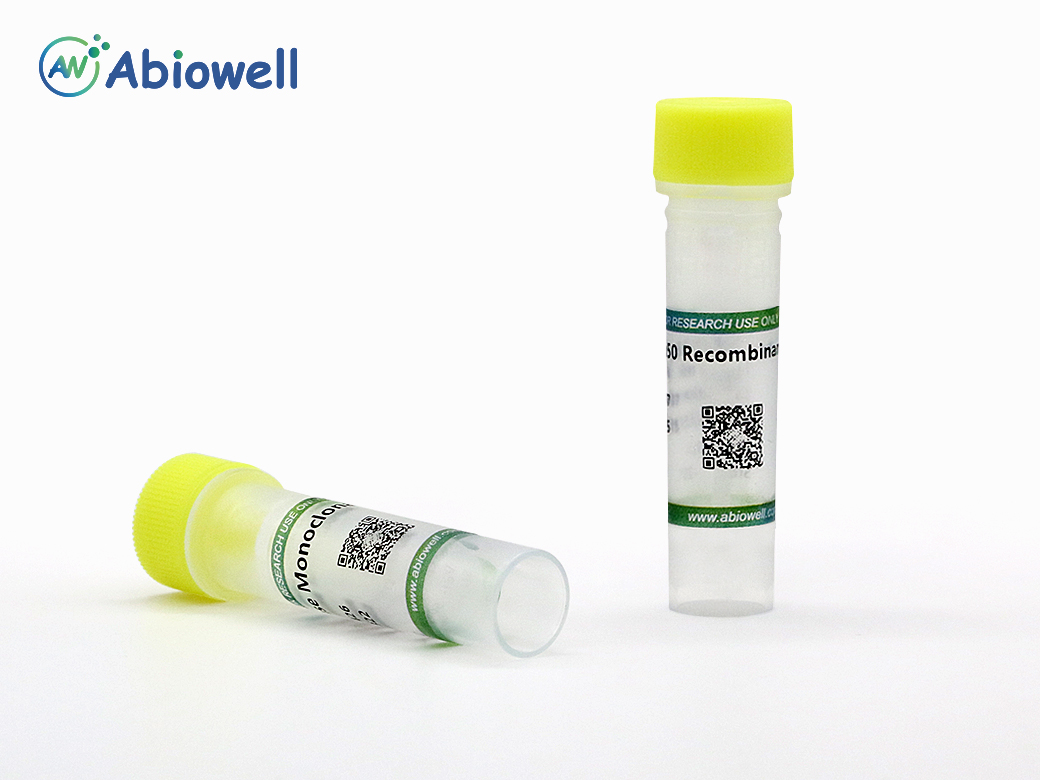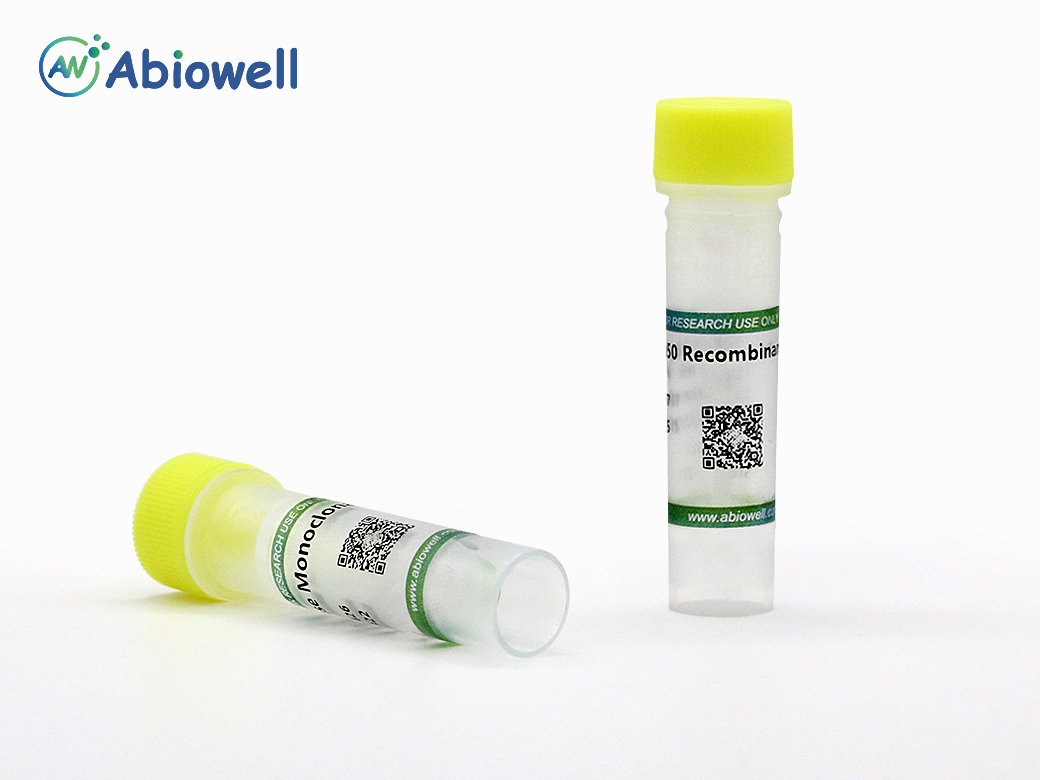
NFκB-p65 Recombinant Mouse Monoclonal Antibody
-
-
- 20μL
- ¥620
- 1-3个工作日
-
- 50μL
- ¥1250
- 1-3个工作日
-
- 100μL
- ¥2200
- 1-3个工作日
|
Product Details |
Host Species: Mouse |
Reactivity: Human, Mouse |
Molecular Wt: Predicted MW: 60 kDa | |||
|
|
Clonality: Monoclonal |
Isotype: IgG2a |
Concentration: 1.075mg/ml | |||
|
|
Other Names: RELA; NFKB3; Transcription factor p65; Transcription factor NFKB3; Nuclear factor NF-kappa-B p65 subunit; relA; Nuclear factor of kappa light polypeptide gene enhancer in B-cells 3; NFkappaB p65; p65; NFkB p65; Nuclear factor kappaB; p65 NF kappaB; p65 NFkB; NFκB-p65 | |||||
|
|
Formulation: Liquid in PBS containing 50% glycerol, 0.5% BSA and 0.02% sodium azide. | |||||
|
|
Purification: Affinity-chromatography | |||||
|
|
Storage: Store at -20°C. Stable for one year after shipment. Aliquoting is unnecessary for -20°C storage. | |||||
|
Applications |
WB 1:1000-1:5000 | |||||
|
Immunogen |
Gene Name: RELA |
Protein Name: Transcription factor p65 | ||||
|
|
Gene ID: 5970 (Human) |
SwissPro: Q04206 (Human) | ||||
|
Immunogen |
Subcellular Location: Nucleus. Cytoplasm. | |||||
|
|
Immunogen: Recombinant protein within human NFκB-p65. | |||||
|
|
Specificity: NFκB-p65 Monoclonal Antibody detects endogenous levels of NFκB-p65 protein. | |||||
| Product images | |
|
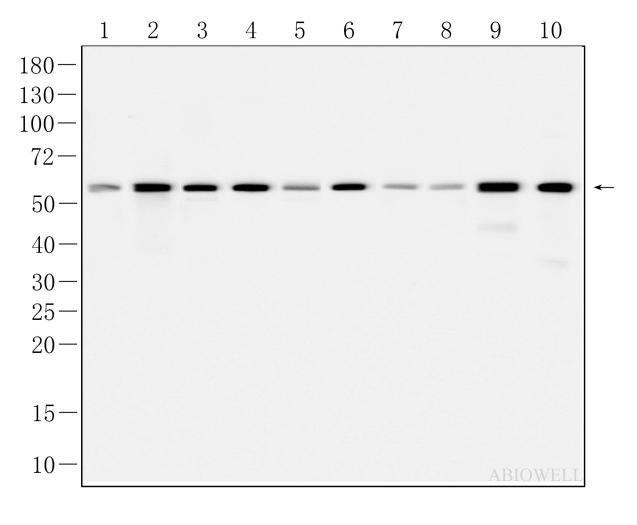
Fig : Western blot analysis of NFκB-p65 on different lysates. Proteins were transferred to a NC membrane and blocked with 5% NF-Milk in TBST for 1 hour at room temperature. The primary antibody (AWA00848, 1/1000) was used in TBST at room temperature for 2 hours. Goat Anti-Mouse IgG - HRP Secondary Antibody (AWS0001) at 1:5,000 dilution was used for 1 hour at room temperature. Positive control: Lane 1: Hela cell Lane 2: Jurkat cell Lane 3: PC12 cell Lane 4: HepA1-6 cell Lane 5: HSC-T6 cell Lane 6: 4T1 cell Lane 7: SHZ-88 cell Predicted molecular weight:60 kDa Observed molecular weight:65 kDa |
|
Fig:Immunoprecipitation of NFκB-p65 from HEK293 cells was performed using NFκB-p65 Mouse mAb (AWA00848,1:250). Rabbit IgG isotype control was used to precipitate the Control IgG sample. The IP sample was eluted with Glycine buffer. Western blot analysis of immunoprecipitates was conducted using NFκB-p65 Mouse mAb (AWA00848) at a dilution of 1:1000. Goat Anti-Mouse IgG(H+L) - HRP Secondary Antibody (AWS0001) at 1:5,000 dilution. |
引用文献 (4)
Preventing post-surgical recurrence and metastasis in advanced gastric cancer through tumor vaccines necessitates a more surgically compatible strategy. Here, we propose an intraoperatively applicable platform featuring a self-adjuvant tumor vaccine co-delivered with PD-1 blockade in fibrin gel (FG) to inhibit post-surgical tumor relapse. First, the tumor cell membrane vaccine is modified via simple insertion of DSPE-PEG-αCD40, which simultaneously endows the vaccine with targeting and self-adjuvant effects on antigen-presenting cells (APCs). This αCD40-modified vaccine (Vax-αCD40) significantly stimulates dendritic cell maturation and reprograms macrophages toward pro-inflammatory phenotypes in vitro and in vivo. Moreover, when Vax-αCD40 and αPD-1 are encapsulated within FG to form an adhesive “vaccine pool”, a positive feedback loop of CD40 expression-αCD40 stimulation on APCs exerts synergistic immune activation at the surgical site. In mouse models, this co-delivery system effectively suppresses local recurrence and peritoneal metastasis, which is associated with increased APC infiltration, cytotoxic CD8 + T cell expansion, and durable immune memory. This strategy represents a translatable approach for preventing recurrence in gastrointestinal malignancies.
Background Cerebral ischemia/reperfusion (I/R) injury induces neuronal ferroptosis and microglial phenotypic shifts, driving post-ischemic neurological deficits. This study examines the regulatory role of the N6-methyladenosine (m6A) reader insulin-like growth factor 2 mRNA-binding protein 1 (IGF2BP1) in coordinating these pathological processes through Keap1/Nrf2 signaling. Methods Cerebral I/R injury was modeled in C57BL/6 mice via middle cerebral artery occlusion (MCAO) and in hippocampal neurons and microglia through oxygen-glucose deprivation/reperfusion (OGD/R). Pro-inflammatory microglial polarization was induced by LPS/IFN-γ stimulation. IGF2BP1's functional impacts were assessed through knockdown and overexpression approaches, with mechanistic evaluations focusing on ferroptosis biomarkers, microglial polarization states, and Keap1/Nrf2 pathway activity. A microglia-neuron co-culture system elucidated cellular crosstalk mechanisms. Results MCAO-operated mice demonstrated upregulated IGF2BP1 expression accompanied by neuronal apoptosis and microglial M1 polarization. IGF2BP1 silencing significantly attenuated OGD/R-induced neuronal ferroptosis, evidenced by reduced iron overload (Fe 2+ ), lipid peroxidation (MDA), and reactive oxygen species (ROS) alongside restored glutathione (GSH) levels, while concurrently enhancing GPX4 activity through Keap1/Nrf2 pathway regulation. This intervention further shifted microglial polarization toward the M2 phenotype, effectively mitigating neuroinflammatory responses. Importantly, the neuroprotective effects of IGF2BP1 knockdown were abolished upon Keap1 overexpression. Co-culture experiments revealed that IGF2BP1-depleted microglia suppressed neuronal ferroptosis via phenotypic reprogramming. In vivo validation confirmed that IGF2BP1 knockdown ameliorated neurological deficits and reduced ferroptosis markers in MCAO-challenged mice. Conclusion IGF2BP1 serves as a critical regulator of cerebral I/R injury by exacerbating neuronal ferroptosis and sustaining detrimental microglial activation. These findings nominate IGF2BP1 inhibition as a promising strategy for ischemic stroke intervention.
Background Microglia-mediated neuroinflammation is closely related to the development of Alzheimer's disease (AD). This study further elucidated the regulatory mechanism of microglia polarization in AD. Method Microglia polarization was assessed using RT-qPCR, ELISA, and immunofluorescence (IF). Western blot (WB) analyzed inflammation-related, p-tau, and apoptosis-related proteins. Neuronal damage was evaluated by immunofluorescence, and neuronal apoptosis by flow cytometry and TUNEL assay. METTL3 and IκBα expression were detected using RT-qPCR and WB. N 6 -methyladenosine (m 6 A) levels were quantified with a colorimetric assay. RNA pull-down assay examined METTL3, IGF2BP2, and IκBα mRNA binding. IGF2BP expression was assessed by RT-qPCR. Learning and memory abilities were evaluated using morris water maze (MWM) test and novel object recognition (NOR) test. Inflammation-related proteins were detected using IF. Results Stimulation with Aβ 1-42 led to microglia M1 polarization, upregulation of inflammation-related proteins, and exacerbation of neuronal injury and apoptosis, along with increased p-tau expression in neurons. METTL3/IGF2BP2 modulated IκBα m 6 A modification through binding to IκBα mRNA, enhancing its expression. Enhanced METTL3 or IGF2BP2 expression suppressed M1 polarization, inflammation, and neuronal apoptosis in microglia, reversed by knockdown of IκBα. AD model mice exhibited cognitive impairments, neuroinflammation, and elevated M1 polarization. METTL3 or IGF2BP2 overexpression improved cognitive function, reduced neuroinflammation, and inhibited M1 polarization, and this effect was similarly reversed by knockdown of IκBα. Conclusion Our study demonstrates that the METTL3/IGF2BP2/IκBα axis is involved in neuroinflammation in AD by modulating microglia M1/M2 polarization, which sheds light on the treatment of AD.
BackgroundAntigen 85B (Ag85B) is a signature antigen of Mycobacterium tuberculosis (MTB). In this study, we aimed to investigate the impact of macrophages stimulated with Ag85B on bronchial epithelial cells and T cells, as well as the underlying mechanisms involved.MethodsWe used Ag85B to stimulate macrophage and investigated the impact of Ag85B on macrophage polarization. We assessed the impact of TLR4 on Ag85B-mediated macrophage polarization by silencing TLR4. Additionally, the regulatory role of TLR4 on the TRAF6/NF-κB pathway was evaluated through immunoblotting. Activated macrophages with Ag85B were co-cultured with mouse bronchial epithelial cells (MBECs) and T cells, respectively. Through immunoblotting quantification, biochemical methods, and flow cytometry, we explored the effects and molecular mechanisms of Ag85B-induced macrophage activation on bronchial epithelial cell damage and T-cell transformation.ResultsIn macrophages stimulated with Ag85B, levels of M1 polarization-related genes (CXCL9, CXCL10, and iNOS) and cytokines (IL-6, TNF-α, IL-1β, and IL-12) were increased, and the M1/M2 ratio was elevated. TLR4 silence inhibited the effects of Ag85B on macrophages and decreased TRAF6 and p-NF-κB/NF-κB levels. TRAF6 overexpression reversed the inhibitory effect of TLR4 on macrophage stimulation with Ag85B. After co-culturing with macrophages induced by Ag85B, MBEC cell proliferation was inhibited, apoptosis was promoted, and the TH17/Treg ratio of T cells was increased. Silencing TLR4 reversed the impact of Ag85B-induced macrophage polarization on bronchial epithelial cells and T cells, which was further reversed by TRAF6 overexpression.ConclusionAg85B promoted M1 polarization in macrophages through the TLR4/TRAF6/NF-κB axis, resulting in bronchial epithelial cell damage and an imbalance in TH17/Treg cells.
-
-
- 20μL
- ¥620
- 1-3个工作日
-
- 50μL
- ¥1250
- 1-3个工作日
-
- 100μL
- ¥2200
- 1-3个工作日
-
相关产品
-
CD31 Recombinant Rabbit Monoclonal Antibody
Occludin Recombinant Rabbit Monoclonal Antibody
Occludin Recombinant Mouse Monoclonal Antibody
O-Linked N-Acetylglucosamine Recombinant Mouse Monoclonal Antibody
Biotin Recombinant Rabbit Monoclonal Antibody
Biotin Recombinant Mouse Monoclonal Antibody
RUNX2 Recombinant Mouse Monoclonal Antibody
KiSS-1R Recombinant Rabbit Monoclonal Antibody