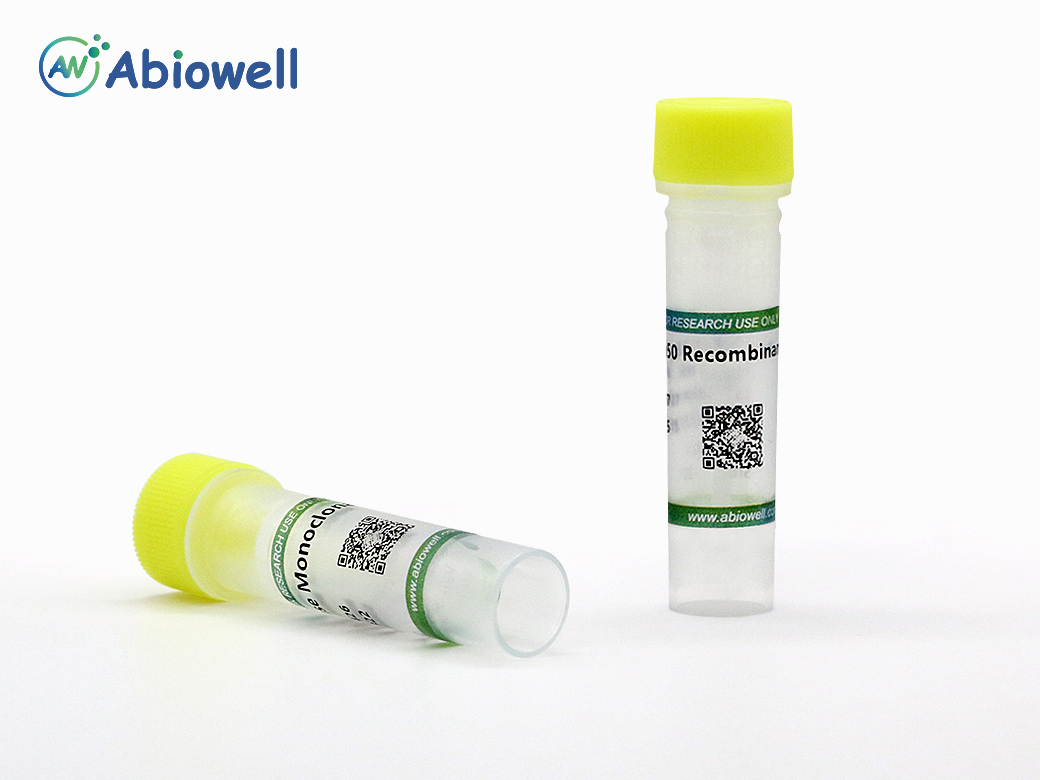
FACL4 Recombinant Rabbit Monoclonal Antibody
-
-
- 20μL
- ¥620
- 有库存
-
- 50μL
- ¥1250
- 有库存
-
- 100μL
- ¥2200
- 有库存
Product Details
| Host Species: Rabbit | Reactivity: Human,Mouse,Rat | Molecular Wt: 79 kDa | |
Clonality: Monoclonal | Isotype: IgG | Concentration: 1 mg/ml | ||
Other Names: ACS4; ACSL4; ACSL4/FACL4; FACL4; LACS 4; LACS4; MRX63; MRX68 | ||||
Formulation: Liquid in PBS containing 50% glycerol, 0.5% BSA and 0.02% sodium azide. | ||||
Purification: Affinity-chromatography | ||||
Storage: -20°C,1 year | ||||
Applications
| WB 1:500-1:1000 IHC-P 1:50-1:200 IF 1:50-1:100 FC 1:50-1:100
| |||
Immunogen Information | Gene Name: ACSL4 ACS4 FACL4 LACS4 | Protein Name: ACSL4 | ||
Gene ID: 2182 (Human) 50790 (Mouse) 113976 (Rat) | SwissPro: O60488 (Human) Q9QUJ7 (Mouse) O35547 (Rat)
| |||
Immunogen: Recombinant protein within human FACL4 AA range:561-711 (Cytoplasmic). | ||||
Specificity: FACL4 Monoclonal Antibody detects endogenous levels of FACL4 protein. | ||||
| Product images | |
|
|
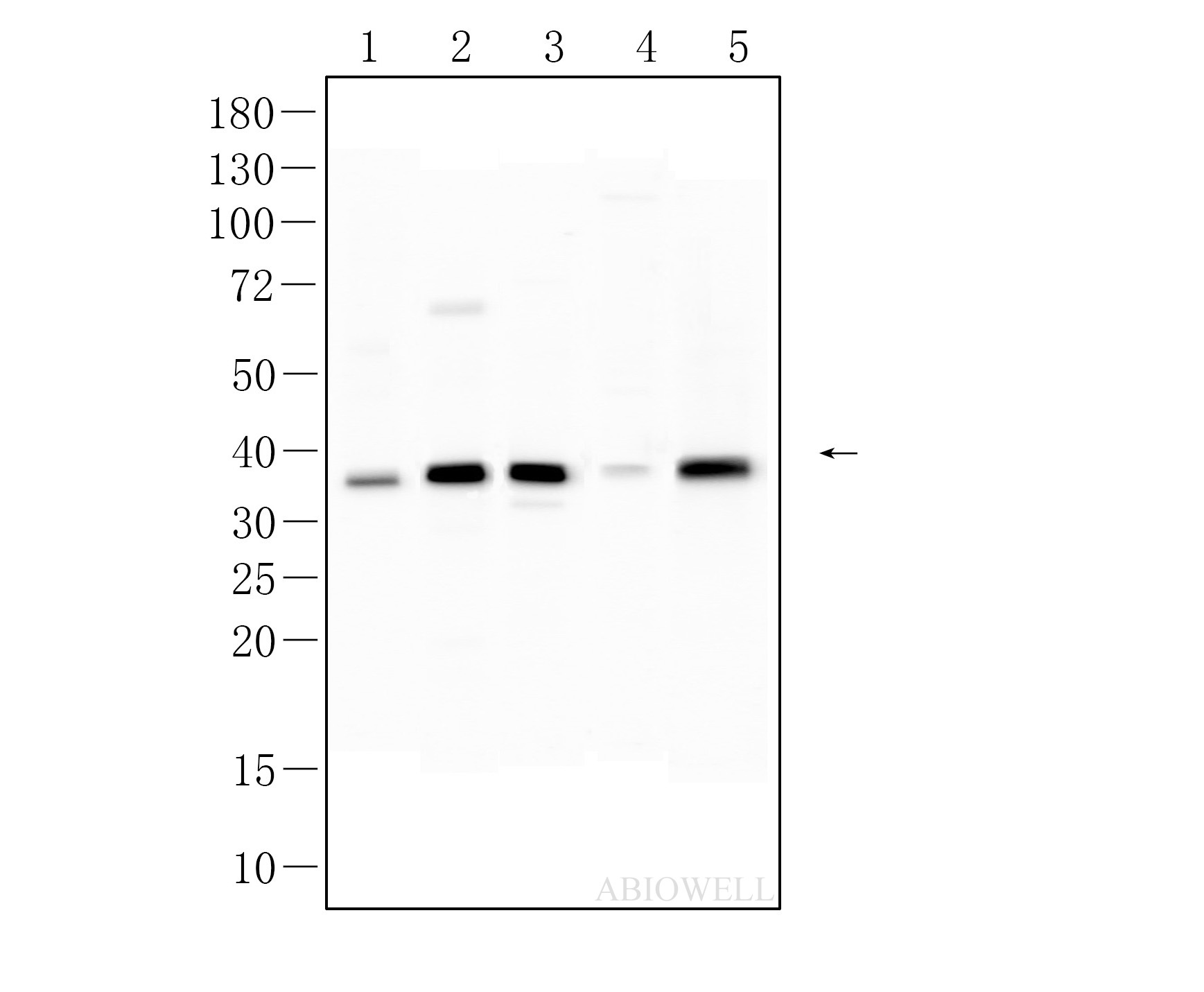
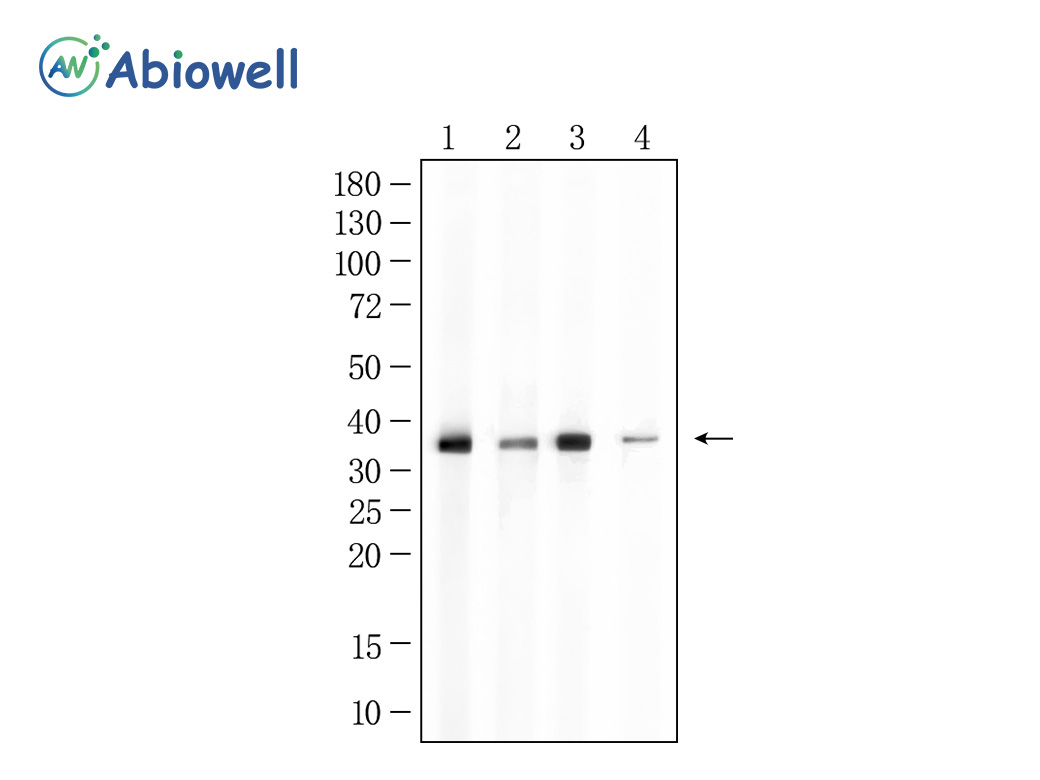
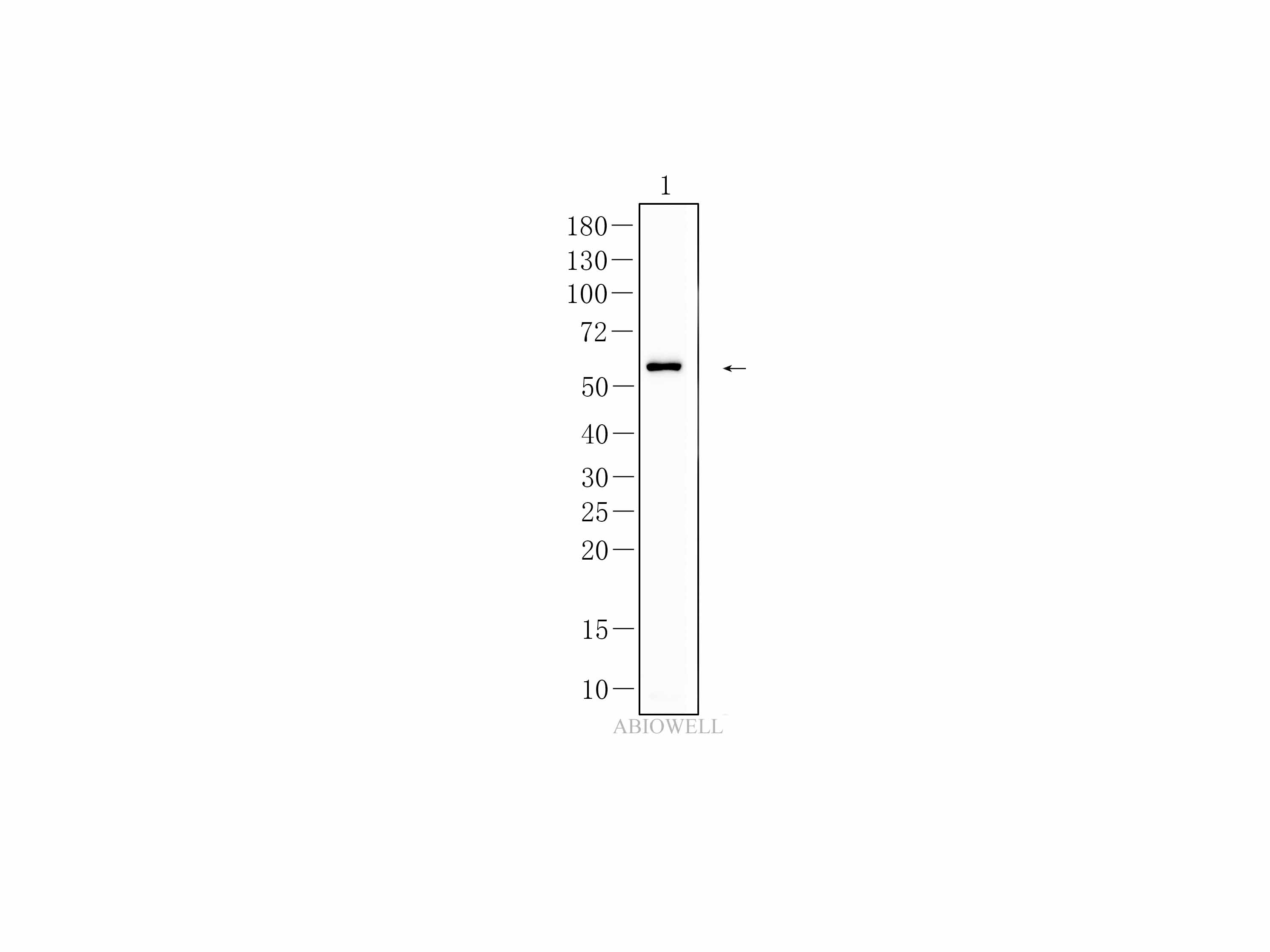
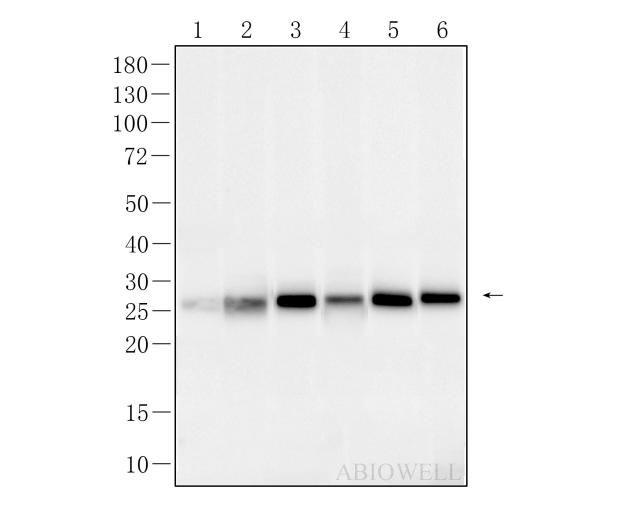
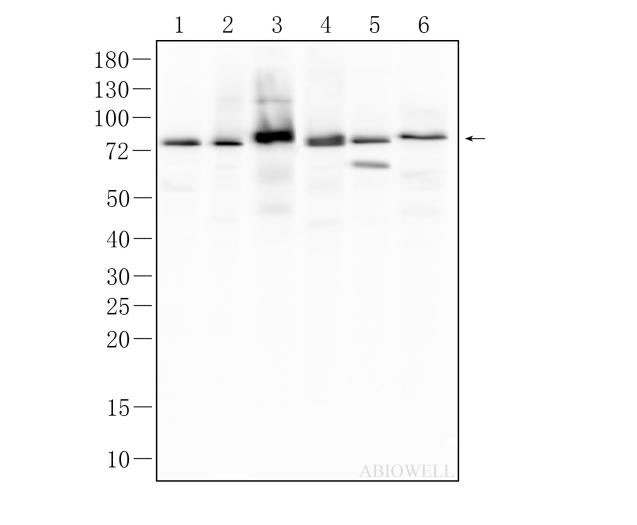
Fig : Western blot analysis of FACL4 on different lysates. Proteins were transferred to a NC membrane and blocked with 5% NF-Milk in TBST for 1 hour at room temperature. The primary antibody (AWA12612 39B231009, 1/1000) was used in PBST at room temperature for 2 hours. Goat Anti-Rabbit IgG - HRP Secondary Antibody (AWS0002) at 1:5,000 dilution was used for 1 hour at room temperature. Positive control: Lane 1: NIH/3T3 cell lysate Lane 2: Hela cell lysate Lane 3: HEPG2 cell lysate Lane 4: HEPA1-6 cell lysate Lane 5: HCT-116 cell lysate Lane 6: MC38 cell lysate |
|
|
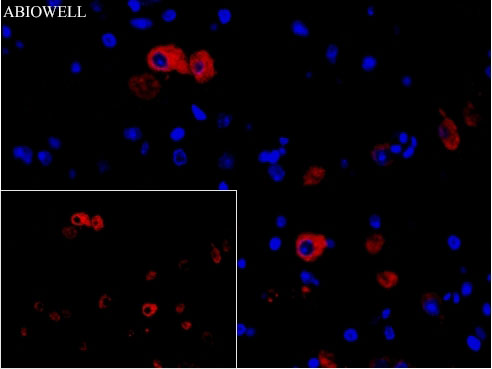
Fig: Fluorescence immunohistochemical analysis of Mouse-cerebellum tissue (Formalin/PFA-fixed paraffin-embedded sections). with Rabbit anti-FACL4 antibody (AWA12612) at 1/100 dilution. The immunostaining was performed with the TSA Immuno-staining Kit (ABIOWELL, AWI0689). The section was pre-treated using heat mediated antigen retrieval with EDTA buffer (pH 9.0) for 20 minutes. The tissues were blocked in 1% BSA for 20 minutes at room temperature, washed with ddH2O and PBS, and then probed with the primary antibody (AWA12612) at 1/100 dilution for 1 hour at room temperature. The detection was performed using an HRP conjugated compact polymer system followed by a separate fluorescent tyramide signal amplification system (red). DAPI (blue, AWC0291) was used as a nuclear counter stain. Image acquisition was performed with Slide Scanner. |
|
|
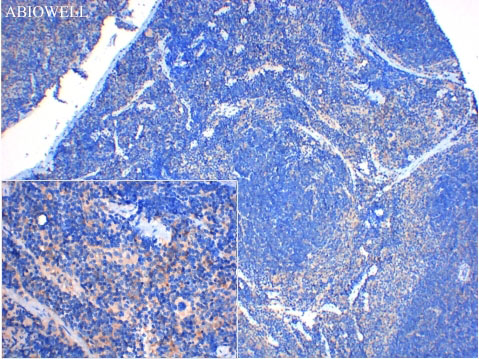
Fig : Immunohistochemical analysis of paraffin-embedded mouse-spleen tissue with Rabbit anti-FACL4 antibody ( AWA12612 ) at 1/100 dilution. The section was pre-treated using heat mediated antigen retrieval with Sodium citrate buffer (pH 6.0) for 20 minutes. The tissues were blocked in 3% H2O2 for 15 minutes at room temperature, washed with ddH2O and PBS, and then probed with the primary antibody ( AWA12612 ) at 1/100 dilution for 1 hour at room temperature. The detection was performed using an HRP conjugated compact polymer system(ABIOWELL, AWI0629). DAB was used as the chromogen. Tissues were counterstained with hematoxylin and mounted with DPX. |
|
|
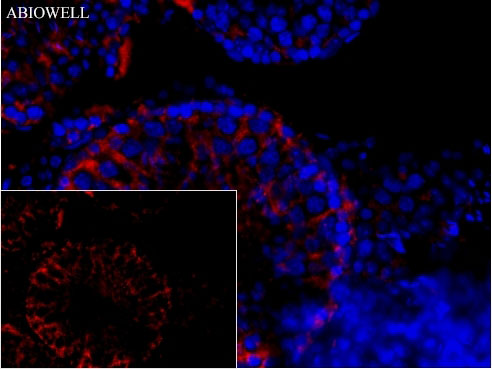
Fig: Fluorescence immunohistochemical analysis of Mouse-testicle tissue (Formalin/PFA-fixed paraffin-embedded sections). with Rabbit anti-FACL4 antibody (AWA12612) at 1/100 dilution. The immunostaining was performed with the TSA Immuno-staining Kit (ABIOWELL, AWI0689). The section was pre-treated using heat mediated antigen retrieval with EDTA buffer (pH 9.0) for 20 minutes. The tissues were blocked in 1% BSA for 20 minutes at room temperature, washed with ddH2O and PBS, and then probed with the primary antibody (AWA12612) at 1/100 dilution for 1 hour at room temperature. The detection was performed using an HRP conjugated compact polymer system followed by a separate fluorescent tyramide signal amplification system (red). DAPI (blue, AWC0291) was used as a nuclear counter stain. Image acquisition was performed with Slide Scanner. |
|
|
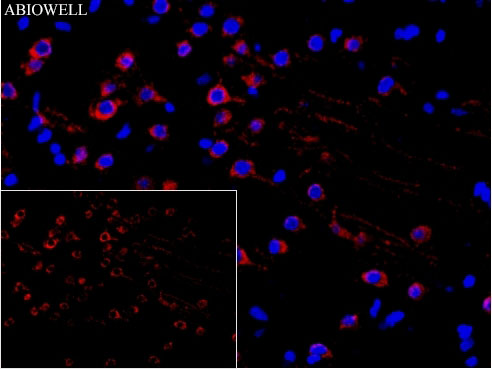
Fig: Fluorescence immunohistochemical analysis of Rat-brain tissue (Formalin / PFA-fixed paraffin-embedded sections). with Rabbit anti-FACL4 antibody (AWA12612) at 1/100 dilution. The immunostaining was performed with the TSA Immuno-staining Kit (ABIOWELL, AWI0689). The section was pre-treated using heat mediated antigen retrieval with EDTA buffer (pH 9.0) for 20 minutes. The tissues were blocked in 1% BSA for 20 minutes at room temperature, washed with ddH2O and PBS, and then probed with the primary antibody (AWA12612) at 1/100 dilution for 1 hour at room temperature. The detection was performed using an HRP conjugated compact polymer system followed by a separate fluorescent tyramide signal amplification system (red). DAPI (blue, AWC0291) was used as a nuclear counter stain. Image acquisition was performed with Slide Scanner. |
|
|
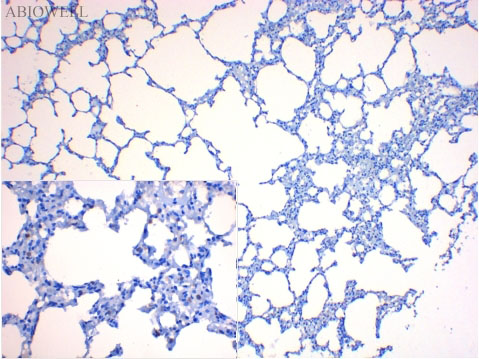
Fig : Immunohistochemical analysis of paraffin-embedded rat-lung tissue with Rabbit anti-FACL4 antibody ( AWA12612 ) at 1/100 dilution. The section was pre-treated using heat mediated antigen retrieval with Sodium citrate buffer (pH 6.0) for 20 minutes. The tissues were blocked in 3% H2O2 for 15 minutes at room temperature, washed with ddH2O and PBS, and then probed with the primary antibody ( AWA12612 ) at 1/100 dilution for 1 hour at room temperature. The detection was performed using an HRP conjugated compact polymer system(ABIOWELL, AWI0629). DAB was used as the chromogen. Tissues were counterstained with hematoxylin and mounted with DPX. |
|
|
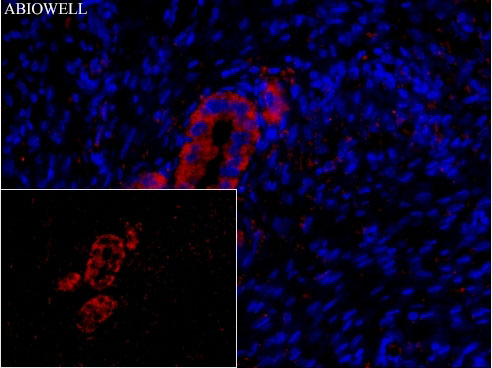
Fig: Fluorescence immunohistochemical analysis of Rat-uterus tissue (Formalin / PFA-fixed paraffin-embedded sections). with Rabbit anti-FACL4 antibody (AWA12612) at 1/100 dilution. The immunostaining was performed with the TSA Immuno-staining Kit (ABIOWELL, AWI0689). The section was pre-treated using heat mediated antigen retrieval with EDTA buffer (pH 9.0) for 20 minutes. The tissues were blocked in 1% BSA for 20 minutes at room temperature, washed with ddH2O and PBS, and then probed with the primary antibody (AWA12612) at 1/100 dilution for 1 hour at room temperature. The detection was performed using an HRP conjugated compact polymer system followed by a separate fluorescent tyramide signal amplification system (red). DAPI (blue, AWC0291) was used as a nuclear counter stain. Image acquisition was performed with Slide Scanner. |
|
|
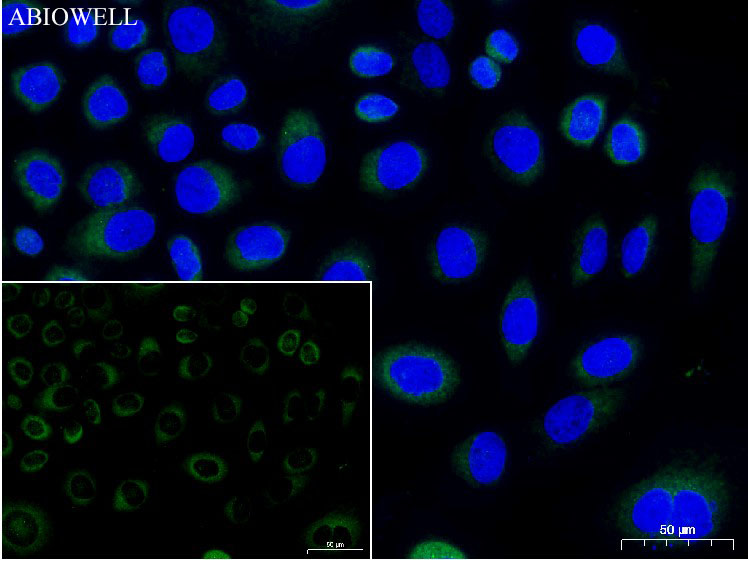
Fig: Immunocytochemistry analysis of Hela cells labeling FACL4 with Rabbit anti-FACL4 antibody (AWA12612) at 1/50 dilution(Green). Cells were fixed in 4% paraformaldehyde for 10 minutes at 37 ℃, permeabilized with 0.03% Triton X-100 in PBS for 30 minutes, and then blocked with 5% BSA for 60 minutes at 37 ℃. Cells were then incubated with Rabbit anti-FACL4 antibody (AWA12612) at 1/50 dilution in 2% negative goat serum overnight at 4 ℃. Goat Anti-Rabbit IgG H&L (iFluor™ 488, AWS0003) was used as the secondary antibody at 1/200 dilution for 60 minutes at 37 ℃. Nuclear DNA was labelled in blue with DAPI(AWC0291). |
|
|
Fig: Fluorescence immunohistochemical analysis of Rat-urinary bladder tissue (Formalin / PFA-fixed paraffin-embedded sections). with Rabbit anti-FACL4 antibody (AWA12612) at 1/100 dilution. The immunostaining was performed with the TSA Immuno-staining Kit (ABIOWELL, AWI0689). The section was pre-treated using heat mediated antigen retrieval with EDTA buffer (pH 9.0) for 20 minutes. The tissues were blocked in 1% BSA for 20 minutes at room temperature, washed with ddH2O and PBS, and then probed with the primary antibody (AWA12612) at 1/100 dilution for 1 hour at room temperature. The detection was performed using an HRP conjugated compact polymer system followed by a separate fluorescent tyramide signal amplification system (red). DAPI (blue, AWC0291) was used as a nuclear counter stain. Image acquisition was performed with Slide Scanner. |
|
|
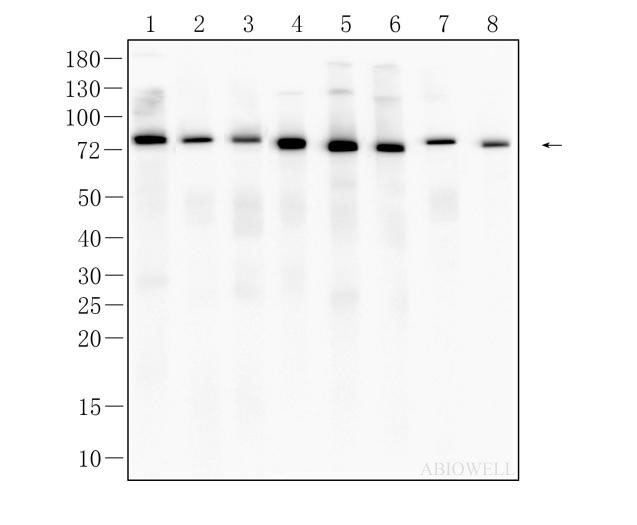
Fig : Western blot analysis of FACL4 on different lysates. Proteins were transferred to a NC membrane and blocked with 5% NF-Milk in TBST for 1 hour at room temperature. The primary antibody (AWA12612, 1/1000) was used in TBST at room temperature for 2 hours. Goat Anti-Rabbit IgG - HRP Secondary Antibody (AWS0002) at 1:5,000 dilution was used for 1 hour at room temperature. Positive control: Lane 1: HEPG2 cell Lane 2: U87-MG cell Lane 3: MC-38 cell Lane 4: U251 cell Lane 5: HELA cell Lane 6: SW620 cell Lane 7: NIH3T3 cell Lane 8: Jurkat cell |
|
|
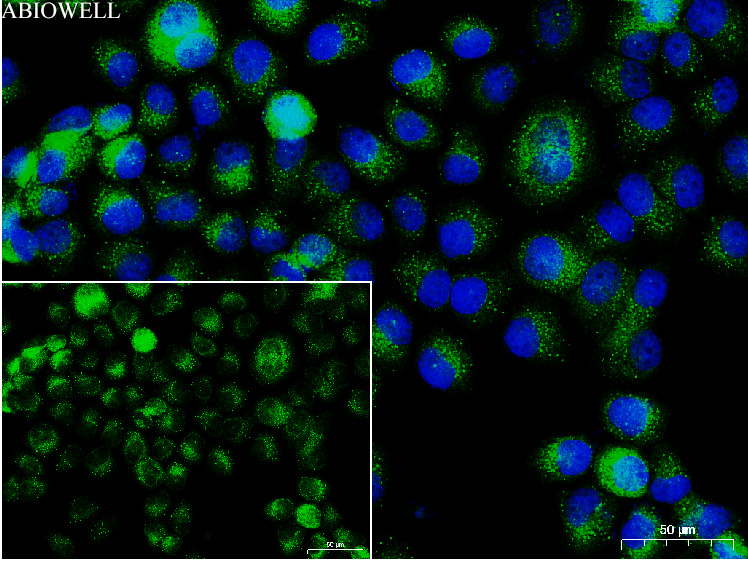
Fig: Immunocytochemistry analysis of Hela cells labeling FACL4 with Rabbit anti-FACL4 antibody (AWA12612)at 1/50 dilution(Green). Cells were fixed in 4% paraformaldehyde for 10 minutes at 37 ℃, permeabilized with 0.03% Triton X-100 in PBS for 30 minutes, and then blocked with 5% BSA for 60 minutes at 37 ℃. Cells were then incubated with Rabbit anti-FACL4 antibody (AWA12612)at 1/50 dilution in 2% negative goat serum overnight at 4 ℃. Goat Anti-Rabbit IgG H&L (iFluor™ 488, AWS0005c) was used as the secondary antibody at 1/200 dilution for 60 minutes at 37 ℃. Nuclear DNA was labelled in blue with DAPI(AWC0291). |
|
|
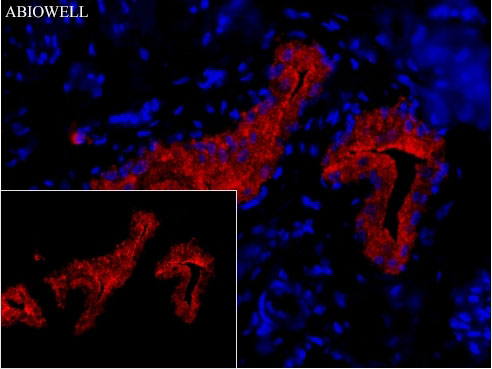
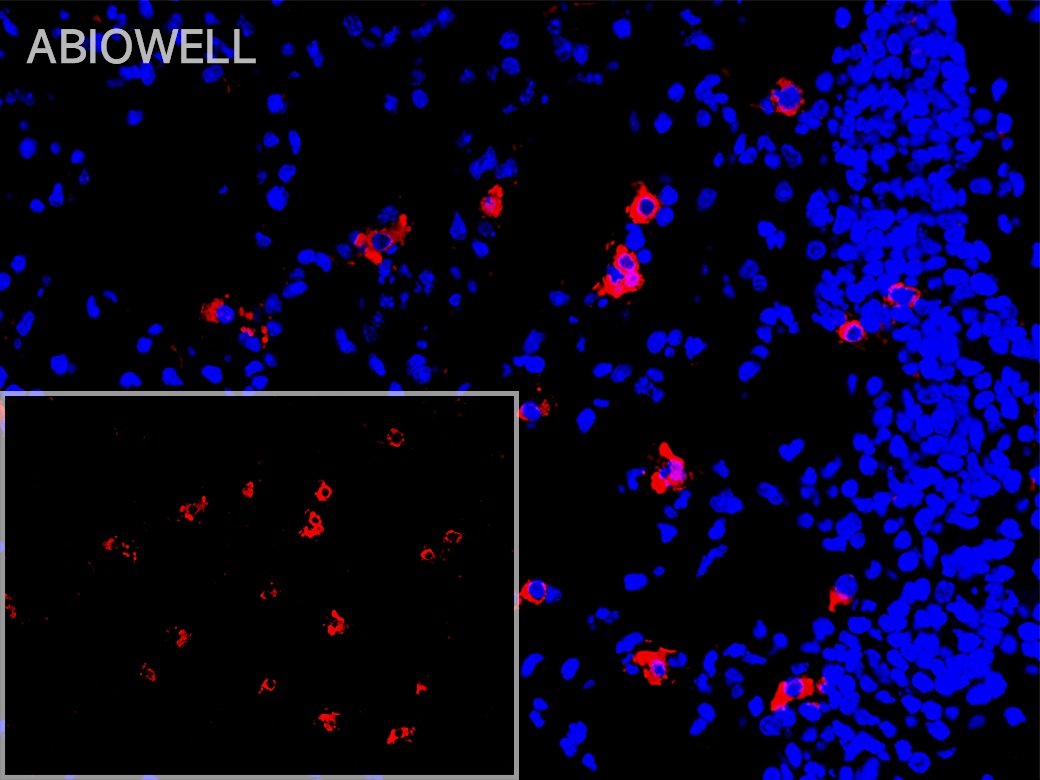
Fig: Fluorescence immunohistochemical analysis of mouse-lung tissue (Formalin/PFA-fixed paraffin-embedded sections). with Rabbit anti-FACL4 antibody (AWA12612) at 1/200 dilution. The immunostaining was performed with the TSA Immuno-staining Kit (ABIOWELL, AWI0689). The section was pre-treated using heat mediated antigen retrieval with Sodium citrate buffer (pH 6.0) for 20 minutes. The tissues were blocked in 3% H2O2 for 15 minutes at room temperature, washed with ddH2O and PBS, and then probed with the primary antibody (AWA12612) at 1/200 dilution for 2 hour at 37℃or overnignt at 4℃. The detection was performed using an HRP conjugated compact polymer system followed by a separate fluorescent tyramide signal amplification system (red). DAPI (blue, AWC0291) was used as a nuclear counter stain. Image acquisition was performed with Slide Scanner. |
-
-
- 20μL
- ¥620
- 1-3个工作日
-
- 50μL
- ¥1250
- 1-3个工作日
-
- 100μL
- ¥2200
- 1-3个工作日
-
相关产品
-
Cdk6 Recombinant Rabbit Monoclonal Antibody
GAPDH Rabbit Polyclonal Antibody
GFAP Recombinant Mouse Monoclonal Antibody
Ki67 Rabbit Monoclonal Antibody
HMGB1 Recombinant Rabbit Monoclonal Antibody
SQSTM1/p62 Mouse Monoclonal Antibody
Bcl-2 Recombinant Rabbit Monoclonal Antibody
SOD2 Rabbit Polyclonal Antibody