辅助试剂

联系我们CONTACT US

  • 172 6727 7467
    24小时服务热线
  • 销售邮箱

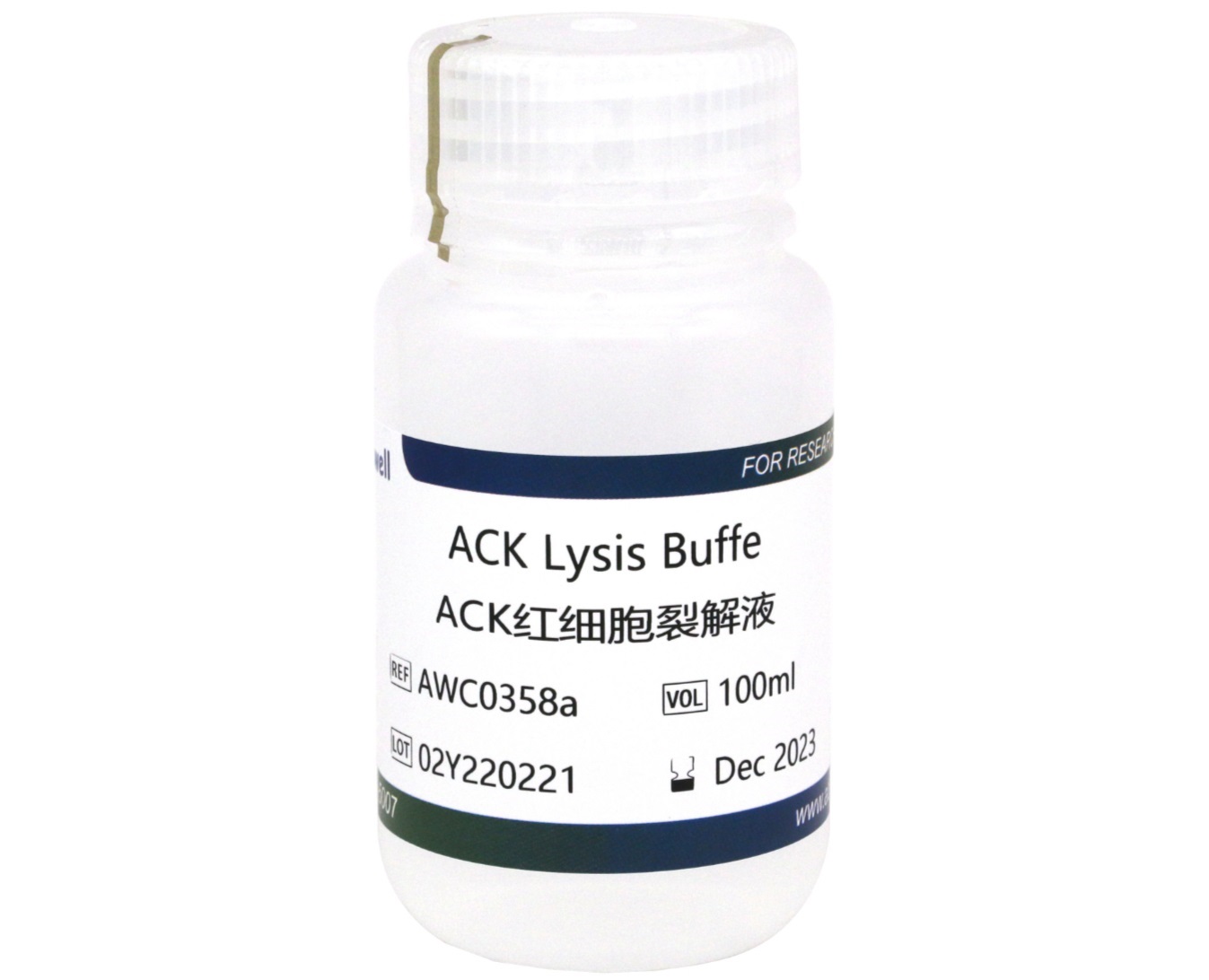
ACK红细胞裂解液(ACK Lysis Buffer)

一键复制产品信息

货号:AWC0358

价格: ¥65

规格: 100ml 500ml

  • 产品概述
  • ACK红细胞裂解液(ACK Lysis Buffer)

    产品简介:

    在生物科研领域,经常需要去除红细胞,去除红细胞的方法有多种,如ACK Lysis Buffer、Tris-氯化铵细胞裂解液、Gey's Lysis Buffer。ACK红细胞裂解液(Red Blood Cell Lysis Buffer) 也称ACK Lysis Buffer,是一种从人、鼠或其他哺乳动物等体内的组织样品或血液中裂解并去除无核红细胞的溶液,其主要有效成分为NH4Cl。

    ACK Lysis Buffer经过优化配方,在裂解无核红细胞的同时几乎不损伤淋巴细胞(Lymphocyte)或其它有细胞核的细胞。对于裂解、去除有细胞核红细胞,例如鸟或禽类的红细胞,效果不佳,裂解类似细胞时,不建议采用。本裂解液经过滤除菌,经过ACK Lysis Buffe处理过的血液或组织细胞样品可以用于后续的细胞培养、细胞融合以及核酸或蛋白的提取及各种常规的分析和检测。

    自备材料:

    1、 胰蛋白酶

    2、 离心机

    3、 PBS、HBSS、生理盐水或血清培养液

    操作步骤(仅供参考):

    (一)组织细胞样本的常规操作

    1、 制备细胞悬液:新鲜组织经过胰蛋白酶或胶原酶等消化处理,通过适当方法制备成细胞悬液,离心弃上清。

    2、 裂解:加入3~5倍细胞沉淀体积的ACK Lysis Buffer,轻柔吹打混匀,裂解1~2min。本操作步骤在4℃条件下操作更佳,亦可在室温下操作。

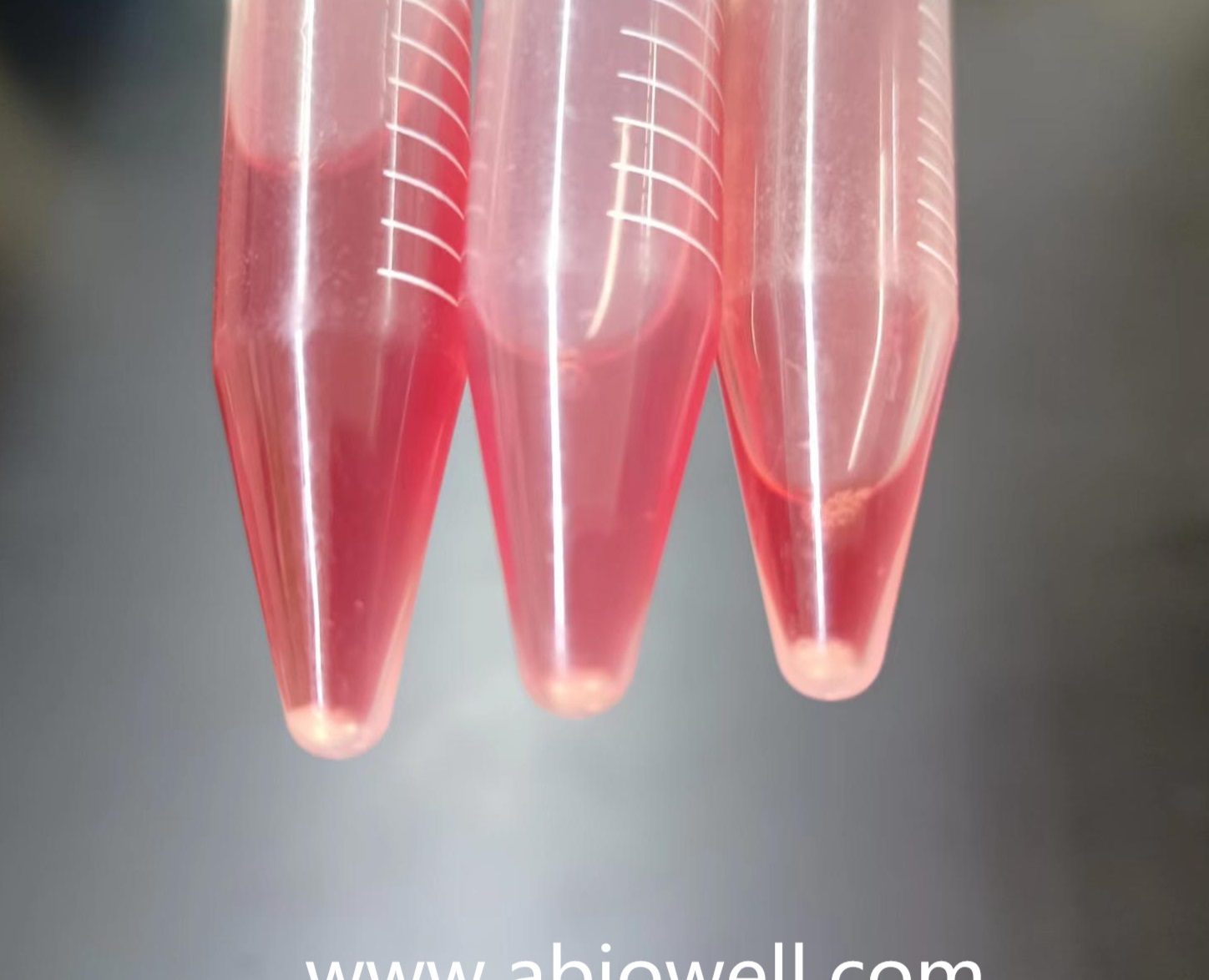
    3、 离心:4℃,400~500g离心5min,弃红色上清。如无低温离心机,本步骤亦可在室温下操作。

    4、 如果发现红细胞裂解不完全,可以重复上述步骤2和步骤3各一次。

    5、 洗涤:根椐实验要求加入适量PBS、HBSS、生理盐水或无血清培养液,轻柔混匀重悬沉淀。4℃,400~500g离心2~3min,弃上清,该离心步骤亦可在室温下操作。所加入的PBS、HBSS、生理盐水或无血清培养液的量一般应大于细胞沉淀体积的5倍以上。

    6、 如有必要,重复上述步骤5一次,共洗涤1~2次。

    7、 根据实验需要用适当溶液重悬细胞沉淀,进行计数、培养等后续实验。

    (二)组织细胞样本的快速操作(无需洗涤)

    1、 制备细胞悬液:新鲜组织经过胰蛋白酶等消化处理,通过适当方法制备成细胞悬液,离心弃上清。

    2、 裂解:加入细胞5倍细胞沉淀体积的ACK Lysis Buffer,轻柔吹打混匀,裂解 1~2min。本操作步骤在4℃条件下操作更佳,亦可在室温下操作。

    3、 加入15~20ml PBS、HBSS、生理盐水或无血清培养液,轻柔混匀。

    4、 离心:4℃,400~500g离心5min,弃红色上清,本离心步骤亦可在室温下操作。

    5、 如果发现红细胞裂解不完全,可以重复上述步骤2~4各一次。

    6、 根据实验需要用适当溶液重悬细胞沉淀,进行计数、培养等后续实验。

    (三)血液样本的常规操作

    1、 取新鲜抗凝血,400~500g离心5min,弃上清。

    2、 裂解:加入6~10倍细胞沉淀体积的ACK Lysis Buffer,轻柔吹打混匀,裂解1~5min。本操作步骤在4℃条件下操作更佳,亦可在室温下操作。(特别提醒:对于鼠的血液,裂解1~2min已经足够,对于人的外周血,宜延长裂解时间至4~5min,并且裂解过程中轻轻摇动以促进红细胞裂解。)

    3、 离心:4℃,400~500g离心5min,弃红色上清。如无低温离心机,本步骤亦可在室温下操作。

    4、 如果发现红细胞裂解不完全,可以重复上述步骤2和步骤3一次。

    5、 洗涤:根椐实验要求加入适量PBS、HBSS、生理盐水或无血清培养液,轻柔混匀重悬沉淀。4℃,400~500g离心2~3min,弃上清,该离心步骤亦可在室温下操作。所加入的PBS、HBSS、生理盐水或无血清培养液的量一般应大于细胞沉淀体积的5倍以上。

    6、 根据实验需要用适当溶液重悬细胞沉淀,进行计数、培养等后续实验。

    注意:对于微量或少量的血液样本,可以不用第1步操作,可直接加入10倍血液体积的ACK Lysis Buffer进行第2步操作,并在4℃或室温裂解4~15min。对于鼠的血液,裂解4~5min已经足够;对于人的外周血,宜延长裂解时间至10min,但通常不宜超过15min,并且裂解过程中宜适当摇动以促进红细胞裂解。

    (四)血液样本的快速操作(无需洗涤)

    1、 新鲜抗凝血中加入10倍体积的ACK Lysis Buffer,轻轻吹打混匀,裂解4~15min。本操作步骤在4℃条件下操作更佳,亦可在室温下操作。(特别提醒:对于鼠的血液,裂解4~5min已经足够,对于人的外周血,宜延长裂解时间至10min,但通常不宜超过15min,并且裂解过程中宜适当摇动以促进红细胞裂解。)

    2、 加入20~30ml PBS、HBSS、生理盐水或无血清培养液,轻柔混匀。

    3、 400~500g离心5min,弃红色上清,4℃离心效果更佳。

    4、 如果发现红细胞裂解不完全,可以重复上述步骤2和步骤3一次。

    5、 根据实验需要用适当溶液重悬细胞沉淀,进行计数、培养等后续实验。

    注意事项:

    1、 制备细胞悬液时应根据实验需要,不一定要制备成单细胞悬液。

    2、 后续试验如果是用于细胞培养,操作过程中应注意无菌操作,尽量在超净工作台内操作。

    3、 离心步骤尽量在4℃离以机上操作。

    4、 常规步骤与快速步骤的区别在于:常规步骤多了一步洗涤过程的离心,可以节省洗涤液的用量,并且洗涤效果也更好,不需要大体积的离以管;快速步骤少了一次离心过程,洗涤效果略差一些,同时需要大体积的离心管。

    5、 离心洗涤后,通常极微量的红细胞不会影响后续的检测。

    6、 如果经过ACK Lysis Buffer处理后的样品后续用于总RNA的提取,在处理细胞时不必使用DEPC处理的溶液,即无需在该操作中特意去除RNase。

    7、 为了您的安全和健康,请穿好实验服并佩戴一次性手套和口罩操作。

    8、 本产品仅限于专业人员的科学研究用,不得用于临床诊断或治疗,不得用于食品或药品,不得存放于普通住宅内。
    产品组成
    名称货号规格storage
    ACK红细胞裂解液(ACK Lysis Buffer)AWC0358-100ml100ml4℃
    ACK红细胞裂解液(ACK Lysis Buffer)AWC0358-500ml500ml4℃

    注意:

    1.本产品仅供科研使用。请勿用于医药、临床诊断或治疗。食品及化妆品等用途。请勿存放于普通住宅区。

    2.为了您的安全和健康,请穿好实验服并佩戴一次性手套和口罩操作。

    3.实验结果可由多种因素影响,相关处理只限于产品本身,不涉及其他赔偿。


    参考文献 (3)

    JOURNAL OF NANOBIOTECHNOLOGY IF:12.6

    Glaucoma is a leading cause of irreversible blindness, primarily driven by the progressive degeneration of retinal ganglion cells (RGCs). In this study, we report the novel application of bone marrow mesenchymal stem cells (BMSCs)-derived apoptotic extracellular vesicles (ApoEVs) in a glaucomatous ischemia/reperfusion (IR) model. ApoEVs exhibited remarkable anti-inflammatory properties, were efficiently internalized by retinal neurons, promoted RGC survival, and preserved visual function. Transcriptomic analysis revealed that ApoEV treatment significantly downregulated Irgm1, an inflammation-related gene. Notably, this study also established a new drug delivery strategy by successfully loading Berberine (Ber)—a natural compound with well-documented anti-inflammatory and neuroprotective effects—onto ApoEVs. The combination further enhanced their protective effects on RGCs, with synergistic suppression of inflammation and improved neuronal viability. Mechanistically, this enhancement was mediated through the coordinated inhibition of the MAPK signaling pathway via Irgm1, which is identified here for the first time as a potential therapeutic target in glaucoma. Collectively, our findings highlight the dual function of Berberine-loaded ApoEVs as a potent cell-free therapeutic strategy that integrates targeted anti-inflammatory and neuroprotective effects, offering a promising new avenue for the treatment of glaucomatous neurodegeneration.Graphical abstract

    Journal of Inflammation Research IF:4.631

    Background: Fibroblast growth factor 15 (FGF15) through its FGF-receptor (FGFR)-4 inhibits hepatic inflammation. The current study aimed at investigating whether FGF15 could inhibit septic inflammation and its compensative regulatory T cell (Treg) responses in a mouse sepsis model of cecal ligation and puncture (CLP) and in vitro transwell co-culture. Methods: Following the sham or CLP procedure, male CLP C57BL/6 mice were intravenously injected with vehicle saline or FGF15 beginning at 2 h post the procedure every 12 h for three days. Some mice were euthanized and their serum and liver samples were collected for examination of cytokines and Tregs by enzyme-linked immunosorbent assay (ELISA), Western blot and flow cytometry. The remaining mice were monitored for their survival up to 14 days post procedure. Moreover, the purified hepatic CD4+ T cells were co-cultured in transwell plates with unmanipulated NCTC 1469 cells or the cells that had been transfected with the control or FGFR4-specific siRNA and treated with, or without, Lipopolysaccharides (LPS) for 24 h, followed by treatment with vehicle PBS or FGF15 for 48 h. Results: Compared with the CLP group of mice, treatment with FGF15 significantly prolonged the mean survival days of mice (12 vs 1.17 in the CLP group, P = 0.022), mitigated hepatic inflammation and reduced the frequency of apoptotic cells in the liver of mice. FGF15 treatment decreased the percentages of hepatic Tregs, hepatic IL-2, TGF-β and FOXP3 expression in septic mice, accompanied by decreasing serum IL-1β, TNF-α, IL-6 and IL-10 levels. Similarly, FGF15 treatment also attenuated the LPS-increased frequency of Tregs, FOXP3 and IL-2 expression and IL-1β, TNF-α, IL-6 and IL-10 secretion in vitro after co-culture with NCTC 1469 cells, but not co-cultured FGFR4-silenced NCTC 1649 cells. Conclusion: FGF15 treatment through FGFR4 ameliorated hepatic inflammation and its compensative Treg responses, which were associated with protecting from septic death in mice.

    JOURNAL OF MICROBIOLOGY AND BIOTECHNOLOGY IF:2.8

    Fetal growth restriction (FGR) is a prevalent obstetric condition. This study aimed to investigate the role of Toll-like receptor 9 (TLR9) in regulating the inflammatory response and gut microbiota structure in FGR. An FGR animal model was established in rats, and ODN1668 and hydroxychloroquine (HCQ) were administered. Changes in gut microbiota structure were assessed using 16S rRNA sequencing, and fecal microbiota transplantation (FMT) was conducted. HTR-8/Svneo cells were treated with ODN1668 and HCQ to evaluate cell growth. Histopathological analysis was performed, and relative factor levels were measured. The results showed that FGR rats exhibited elevated levels of TLR9 and myeloid differentiating primary response gene 88 (MyD88). In vitro experiments demonstrated that TLR9 inhibited trophoblast cell proliferation and invasion. TLR9 upregulated lipopolysaccharide (LPS), LPS-binding protein (LBP), interleukin (IL)-1β and tumor necrosis factor (TNF)-α while downregulating IL-10. TLR9 activated the TARF3-TBK1-IRF3 signaling pathway. In vivo experiments showed HCQ reduced inflammation in FGR rats, and the relative cytokine expression followed a similar trend to that observed in vitro. TLR9 stimulated neutrophil activation. HCQ in FGR rats resulted in changes in the abundance of Eubacterium_coprostanoligenes _group at the family level and the abundance of Eubacterium_coprostanoligenes _group and Bacteroides at the genus level. TLR9 and associated inflammatory factors were correlated with Bacteroides , Prevotella , Streptococcus , and Prevotellaceae_Ga6A1 _group. FMT from FGR rats interfered with the therapeutic effects of HCQ. In conclusion, our findings suggest that TLR9 regulates the inflammatory response and gut microbiota structure in FGR, providing new insights into the pathogenesis of FGR and suggesting potential therapeutic interventions.

    复制成功!

    内容已复制到剪贴板

    在线客服
    关闭
    小薇 薇薇 小艾 小奥
    联系销售
    技术支持

    image.png

    月琴艾碧维二维码.jpg